


Every March 3rd, World Wildlife Day gives the world a reason to stop and think about what’s still out there — the creatures that share this planet with us, that evolved alongside us, that now depend on decisions we make. But if you’ve ever stood on a black lava shoreline in the Galapagos watching a marine iguana slip soundlessly into the Pacific, you already know: this isn’t abstract. It’s visceral. It’s real. And once you’ve experienced it, no amount of statistics can capture what it means to protect it.
This guide breaks down the most iconic Galapagos wildlife — the species that define the archipelago’s identity — along with the context divers and wildlife travelers actually need: conservation status, behavior, ecological role, and what it’s like to encounter them in the water or on shore. No fluff, just the essentials.
Why the Galapagos Is the World’s Most Important Wildlife Classroom
The Galapagos Islands didn’t just inspire Charles Darwin — they gave him the raw data that reshaped biology. What Darwin observed here in 1835 wasn’t a static snapshot of nature; it was evolution in motion. And remarkably, that’s still true today. The Galapagos remains one of the few places on Earth where you can observe active, ongoing adaptive radiation — species still diverging, still adapting, still filling ecological niches in real time.
Approximately 97% of the land area is protected as a national park, and roughly 80% of endemic species remain intact. This is not typical. In most places, biodiversity loss has been so severe that what we call ‘wild’ is a pale shadow of what it once was. In the Galapagos, the benchmark is still the benchmark.
For wildlife travelers and divers, that changes everything. You’re not seeing remnants. You’re seeing a functioning ecosystem — predator-prey dynamics, seasonal migrations, interspecies relationships — all playing out the way they have for millions of years. World Wildlife Day, in the Galapagos, isn’t a concept. It’s a lived experience.
The Iconic Species: What You’ll Encounter and Why It Matters
These aren’t just charismatic megafauna for a wishlist. Each of these species is a keystone in the Galapagos ecosystem — remove one, and the whole structure shifts. Here’s what you need to know before you arrive.
Galapagos Giant Tortoise (Chelonoidis spp.)
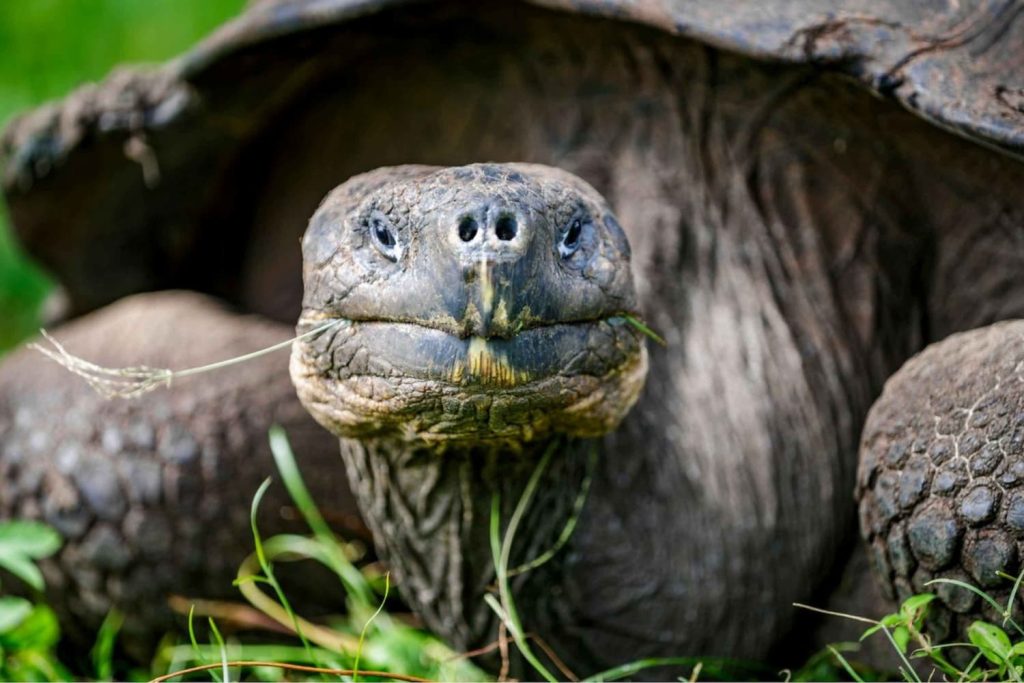
There’s something profoundly disorienting about standing next to an animal that walked these islands before Darwin, before maps, before anyone decided this place mattered enough to protect. Giant tortoises are living geological monuments — some individuals exceed 170 years. They were here. They’ve been here. And for a long period, they almost weren’t.
- Conservation Status: Vulnerable (IUCN Red List)
- Habitat: Highland forests and arid lowlands, varying by island
- Ecological role: Keystone species — their grazing and movement patterns shape vegetation distribution across entire landscapes
- Key adaptation: Can survive over a year without food or water
- Conservation win: Breeding programs have reversed multiple near-extinctions. It’s one of the few genuine success stories in modern wildlife conservation.
Marine Iguana (Amblyrhynchus cristatus)

Darwin called them disgusting. He was wrong. The marine iguana is the only sea-going lizard on Earth, and it’s a masterclass in evolutionary problem-solving. They dive up to 10 meters to graze on underwater algae, then haul out on volcanic rock to thermoregulate. They sneeze out salt through specialized nasal glands. Different island populations have diverged into distinct subspecies — the Española marine iguana, for instance, turns vivid red and green during breeding season, earning the nickname ‘Christmas iguana.’
From a conservation standpoint, marine iguanas are a useful ecosystem health indicator. El Niño events devastate algae availability and can crash populations by 60–70% on some islands within a single season. When you see dense colonies basking along the shoreline during a Galapagos Sky liveaboard, you’re looking at a population in relative health — and that’s not something to take for granted.
Galapagos Penguin (Spheniscus mendiculus)
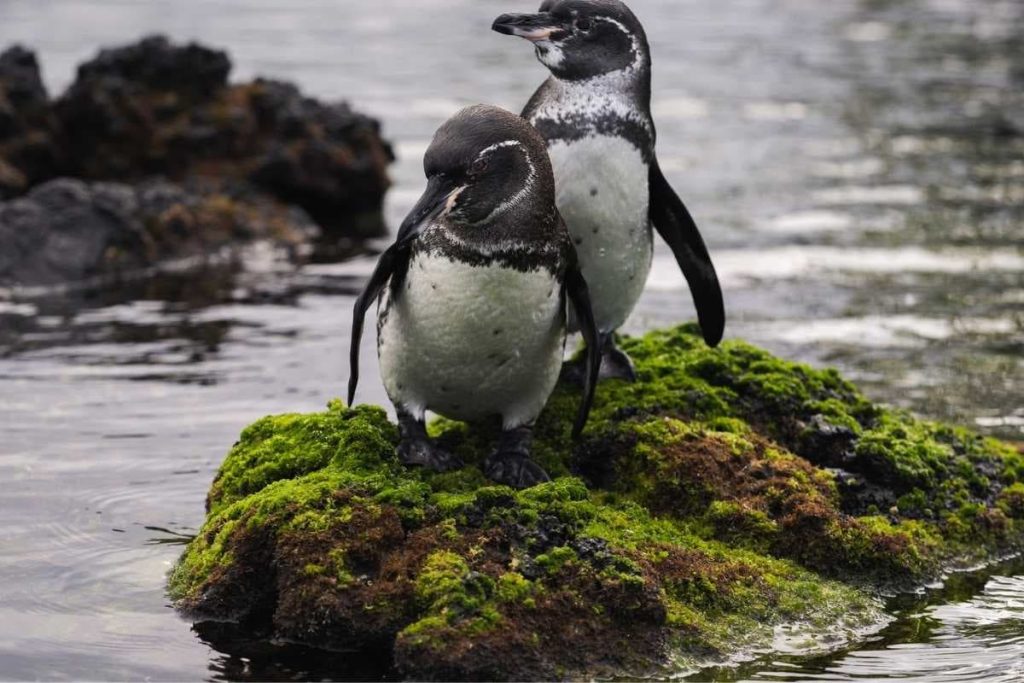
The only penguin species north of the equator, the Galapagos penguin exists here because of a thermodynamic anomaly: the cold Cromwell and Humboldt currents reach the western islands, creating cold, nutrient-dense upwellings in what should be tropical water. Remove those currents — or warm them significantly — and the penguins lose their habitat.
Conservation Status: Endangered. Fewer than 2,000 individuals remain. They’re concentrated on Fernandina and Isabela — the westernmost, least-visited islands — which is one of the reasons a western Galapagos itinerary carries such weight for wildlife divers. Snorkeling alongside Galapagos penguins as they dart and spiral around you underwater is not a common experience. It’s a rare one, and it belongs firmly on the short list of defining wildlife encounters on the planet.
Galapagos Sea Lion (Zalophus wollebaeki)
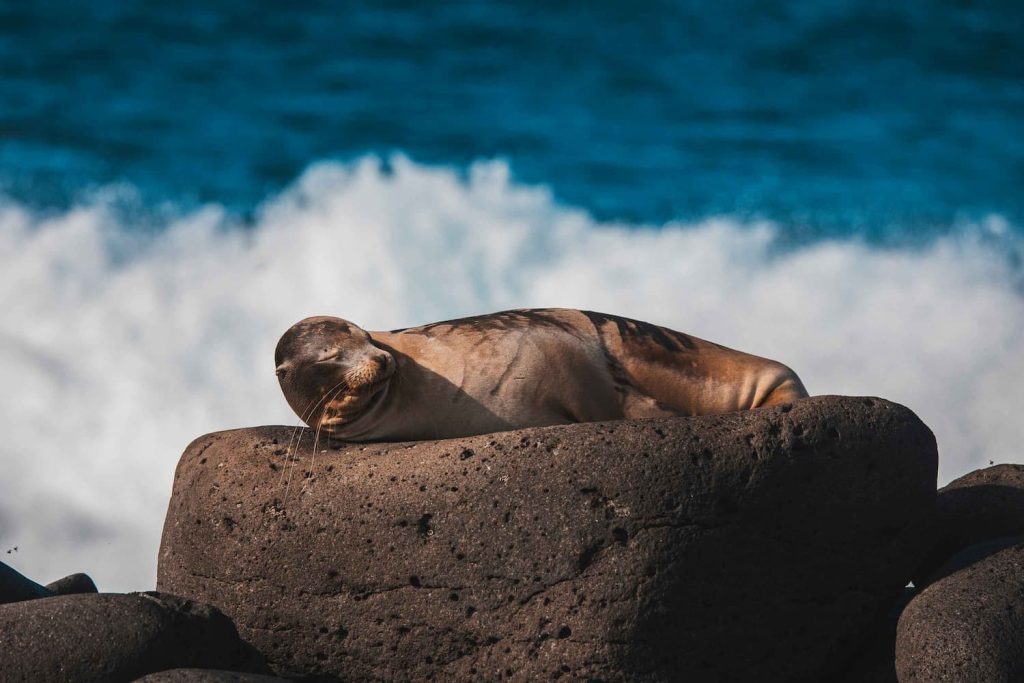
If the giant tortoise is the archipelago’s elder, the sea lion is its personality. Curious, fast, and completely unintimidated by divers, Galapagos sea lions treat the underwater world as their personal playground — and frequently seem to treat visiting divers as participants in whatever game they’ve decided to run. The encounters can be extraordinary.
What’s less visible, and worth understanding:
1. Endangered status — the population has declined steadily, with El Niño events and bycatch in commercial fishing gear as primary drivers.
2. Territorial males (bulls) can be aggressive during breeding season — awareness and distance matter.
3. Pups are the most interactive — they’ve been known to imitate diver movements and engage in play behavior for extended periods underwater.
Blue-footed Booby (Sula nebouxii)
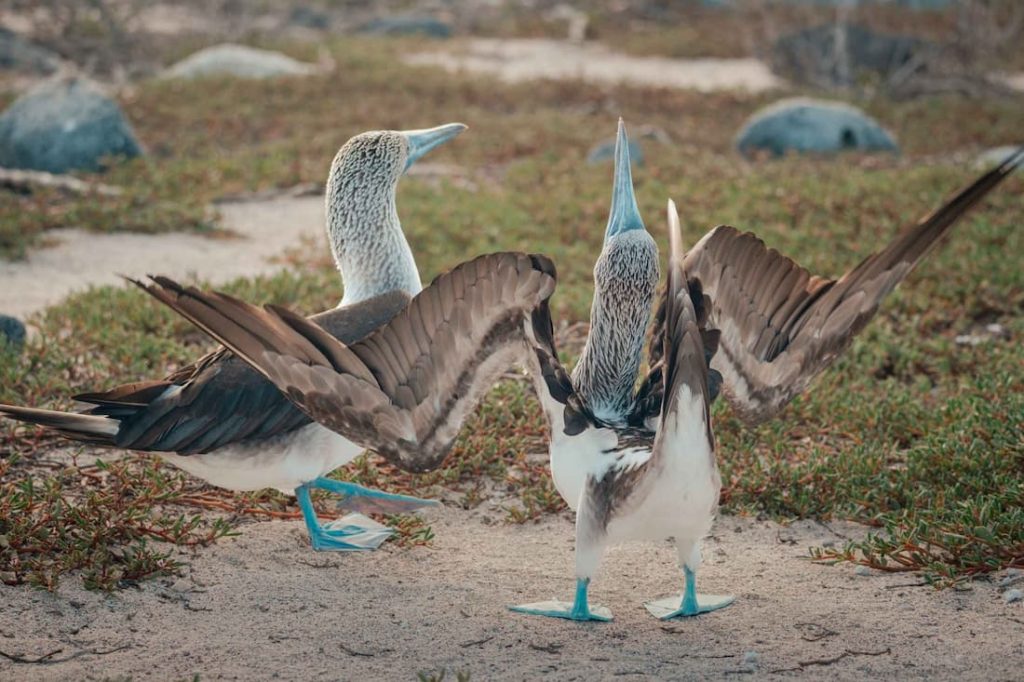
The blue-footed booby is the bird that makes everyone stop. The courtship display — slow, deliberate, high-stepping — is pure theater. And it’s functional: foot coloration signals nutritional status and genetic fitness. The brighter the blue, the more attractive the mate. You can actually observe health status in real time through pigmentation. That’s remarkable, and it’s the kind of detail that naturalist guides on a serious expedition will pull apart for you.
Boobies are also spectacular divers — they plunge from heights of up to 24 meters at speeds that would shatter a human skull. Specialized air sacs cushion the impact. Watching a colony hunt from the surface is a different kind of Galapagos moment: chaotic, fast, and deeply efficient. Conservation Status: Least Concern — though breeding populations on some islands have declined in recent decades, likely tied to fish availability.
Galapagos Hawk (Buteo galapagoensis)
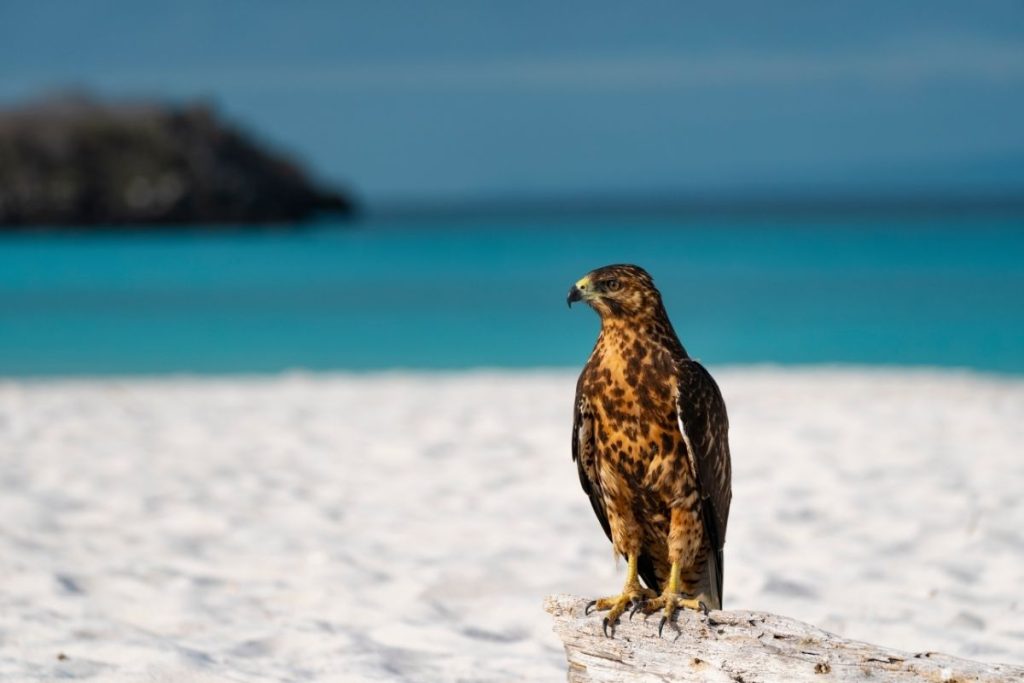
The Galapagos hawk is the archipelago’s apex terrestrial predator, and it shows. Without natural predators of its own, it has evolved zero fear of humans — allowing for the kind of close observation that’s simply impossible almost anywhere else. Perched on a lava cactus at eye level, looking directly at you, it reads less like a wildlife sighting and more like a negotiation.
Conservation Status: Vulnerable. Endemic to the Galapagos and absent from inhabited islands, the hawk’s presence is a reliable indicator of ecosystem health. It controls marine iguana populations, culls sick sea lions, and keeps invasive rodent numbers in check on rat-affected islands. When you see one on a remote uninhabited island, you’re looking at a functional food web.
Underwater: The Galapagos Marine Ecosystem

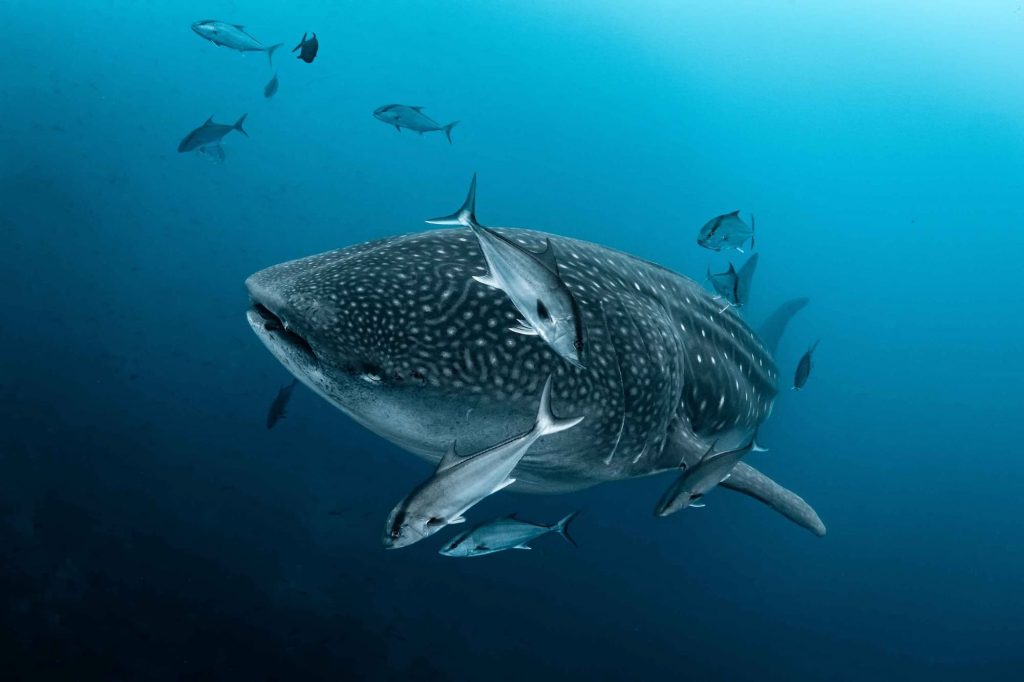
Above the waterline, the Galapagos is extraordinary. Below it, the scale shifts again. The confluence of five major ocean currents — the Humboldt, Cromwell, Panama, South Equatorial, and North Equatorial — creates one of the most nutrient-rich marine environments on Earth. That means biomass. That means megafauna.
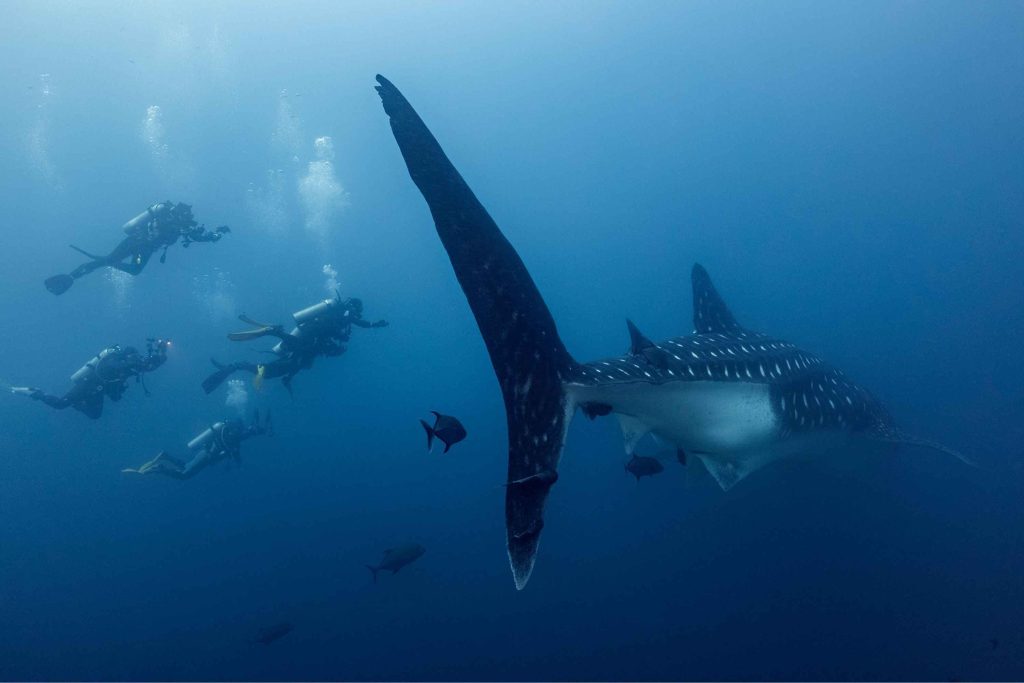
- Whale sharks: Darwin and Wolf islands host some of the highest concentrations of whale sharks documented anywhere on the planet, particularly between June and November.
- Scalloped hammerhead sharks: School in the hundreds at Darwin and Wolf. One of the defining dive experiences on Earth.
- Manta rays: Both oceanic and reef species frequent cleaning stations throughout the archipelago.
- Galapagos fur seals: Distinct from sea lions — smaller, more nocturnal, and found in rocky, shaded coastal areas.
- Galapagos green sea turtles: Among the largest nesting populations in the Eastern Pacific. Endemic subspecies, critically important breeding sites.
Conservation on World Wildlife Day: What Actually Works Here
The Galapagos isn’t pristine by accident. It’s the result of decades of rigorous conservation policy, significant funding, and — critically — a tourism model designed from the ground up to protect what it sells. Approximately 97% of the land is national park territory. Visitor access is regulated by the Galapagos National Park Directorate. Tour operators are licensed and monitored. Every landing site has a certified naturalist guide present.
At Galapagos Sky, our model is built around small-group liveaboard diving expeditions specifically because the format minimizes impact while maximizing encounter quality. Here’s what that looks like in practice:
4. Small-group dives: Limited diver numbers per site reduce disturbance at sensitive locations like Darwin’s Arch and Wolf Island.
5. No-touch protocols: Strict adherence to Galapagos National Park interaction guidelines — no touching, no feeding, maintained distance.
6. Certified naturalist guides: Every expedition is led by licensed guides trained in park protocols and species ecology.
7. Responsible waste management: Elimination of single-use plastics across all operations.
8. Conservation partnerships: Active support of monitoring and restoration programs in the archipelago.
When to Visit for the Best Wildlife Encounters
The Galapagos doesn’t have an ‘off season’ for wildlife — but timing matters for specific encounters. Understanding the seasonality of this place is part of planning a serious expedition, not just a vacation.
- June–November (cool dry season): Peak season for whale sharks at Darwin and Wolf. Penguins often benefit from the cooler, nutrient-rich waters. Hammerhead schools at their densest. Water is cooler (20–23°C), visibility variable.
- December–May (warm wet season): Warmer water (24–27°C), manta rays more active, sea turtle nesting, giant tortoise breeding activity in the highlands. Blue-footed booby courtship peaks.
- March (World Wildlife Day): Sits in the transition toward the end of warm season — sea turtles still nesting, tortoises active, strong surface wildlife activity. A meaningful time to visit with the day’s significance in mind.
The Honest Case for a Liveaboard Diving Expedition

You can visit the Galapagos on a day-trip basis from Santa Cruz or San Cristobal. You’ll see wildlife. But you won’t reach Darwin and Wolf — the remote northern islands where the most significant underwater encounters happen. Those sites are only accessible on a multi-day liveaboard itinerary, and the permit system is structured to keep it that way.
The dive sites at Darwin’s Arch and Wolf Island sit on top of a seamount and an exposed volcanic pinnacle. The currents are strong, the drops are deep, and the encounters — hundreds of hammerheads, whale sharks cruising the blue water column, schools of eagle rays — are not available anywhere else on Earth at this scale. If this is the trip you’re planning, that’s the context. It’s not a casual destination. It’s a pilgrimage for people who’ve been building toward this kind of encounter.
World Wildlife Day is a reminder that this world exists — and that it requires active protection to continue existing. For divers, the Galapagos isn’t just a bucket list destination. It’s a direct argument, made in real time by real animals, for why conservation matters. Galapagos Sky exists to bring you into that argument — not as a spectator, but as someone who leaves with a stake in the outcome.


