


The Galapagos Islands are home to some of the most extraordinary wildlife on the planet, and one of their most iconic residents is the marine iguana. Found nowhere else on Earth, these remarkable reptiles are a symbol of the Galapagos’ evolutionary wonders. For wildlife enthusiasts, photographers, and divers alike, encountering marine iguanas in their natural habitat is a true highlight of any trip to the archipelago.
But where exactly can you find these fascinating creatures? This guide will walk you through the best locations in the Galapagos to spot marine iguanas and help you better understand their unique biology and behavior.
About the Galapagos Marine Iguana
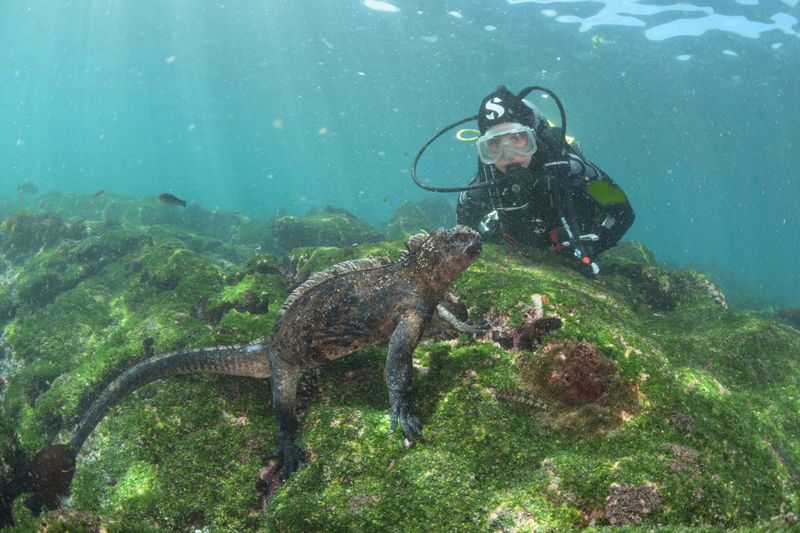
The Galapagos marine iguana (Amblyrhynchus cristatus) is the only lizard in the world that has adapted to life in the ocean. With their spiky crests, salt-excreting glands, and strong claws for clinging to volcanic rock, they are a living example of evolution in action.
These reptiles can often be seen lounging in large groups along coastal rocks, basking in the sun to regulate their body temperature after swimming in the cold ocean currents in search of food.
What Makes It Unique?
Marine iguanas have developed several unique traits that set them apart from their land-dwelling cousins. Chief among these is their ability to dive into the ocean and feed on marine algae, making them the only sea-going lizards in the world.
Some of their other remarkable adaptations include:
- Flattened tails for efficient swimming
- Blunt noses suited for grazing on underwater algae
- Special glands that expel excess salt through their nostrils
- Dark skin to absorb heat quickly after swimming in cold waters
These evolutionary traits not only help them survive but thrive in an otherwise challenging environment.
Why Are They Only Found in the Galapagos Islands?
The isolation of the Galapagos Islands has allowed species like the marine iguana to evolve without competition or predators found elsewhere. Over millions of years, ancestral land iguanas that arrived from mainland South America adapted to their surroundings, eventually giving rise to the marine species.
Their distribution is strictly limited to the Galapagos due to the specific ecological conditions they require: rocky shorelines for basking and nesting, and nutrient-rich cold ocean currents that support their algal diet. These conditions are rarely found together elsewhere, making the Galapagos their exclusive and perfect home.
The Habitat of Marine Iguanas: Understanding Their Environment
The habitat of the Galapagos marine iguana is one of the most specialized ecosystems in the world. These reptiles thrive mainly on rocky shorelines formed by volcanic activity, where they can bask in the sun, rest between dives, and nest. Their environment must provide a combination of sun-exposed lava rocks, access to intertidal algae, and cold, nutrient-rich waters.
The marine iguana environment is highly dynamic. Strong currents, tidal changes, and unpredictable weather patterns all influence their behavior and distribution. The presence of the Humboldt and Cromwell Currents is essential, as these ocean systems bring the algae that marine iguanas depend on for survival.
Because these ecological conditions are rare, the iguana from the Galapagos Islands remains exclusive to this archipelago, showcasing a remarkable example of evolutionary adaptation.
Marine Iguana Behavior Through the Seasons
Seasonal changes greatly affect marine iguana behavior, particularly their breeding season, feeding habits, and activity levels.
Breeding Season Rituals
The breeding season typically occurs from December to March, though timing varies slightly among different islands. During this period:
- Males become highly territorial.
- Their skin becomes brighter, displaying vivid reds, greens, and sometimes turquoise.
- Females travel inland to dig nesting burrows in sandy or loose volcanic soil.
This seasonal transformation highlights the biological diversity that developed over millions of years in the Galapagos.
Conservation Efforts and Threats
Marine iguanas face natural and human-driven threats, making conservation a top priority.
The Role of Galapagos Conservancy
Organizations such as the Galapagos Conservancy are essential for protecting this species. Their work includes:
- Monitoring population health
- Restoring damaged habitats
- Controlling invasive species
- Funding scientific research on climate impact
Environmental Challenges
The biggest threats include:
- El Niño events, which reduce algae and cause starvation
- Plastic pollution
- Introduced predators like feral cats and dogs
- Coastal erosion due to climate change
Understanding these risks helps underscore why protecting the habitat of marine iguanas is critical for their long-term survival.
How Marine Iguanas Evolved Over Millions of Years
Marine iguanas descended from land iguanas that arrived in the Galapagos millions of years ago, gradually adapting to life along the rugged volcanic coasts. Over time, natural selection favored traits like flattened tails, salt-expelling glands, and blunt snouts that helped them feed in the ocean.
As the islands formed and changed, different populations evolved unique characteristics based on their local environments. This long, isolated evolution led to several distinct subspecies, making the marine iguana one of the most remarkable examples of adaptation in the archipelago.

Best Places to See Marine Iguanas in the Galapagos
Marine iguanas can be spotted on most of the islands in the Galapagos, but some locations offer especially memorable encounters.
Española Island
Española Island, located in the southeastern part of the archipelago, is famous for having the largest and most colorful population of marine iguanas. During mating season, these iguanas develop striking red and green hues, earning them the nickname “Christmas iguanas.”
While Española is not part of Galapagos Sky’s regular itineraries, it’s one of the most iconic spots in the archipelago to observe marine iguanas in their natural habitat.
Fernandina Island
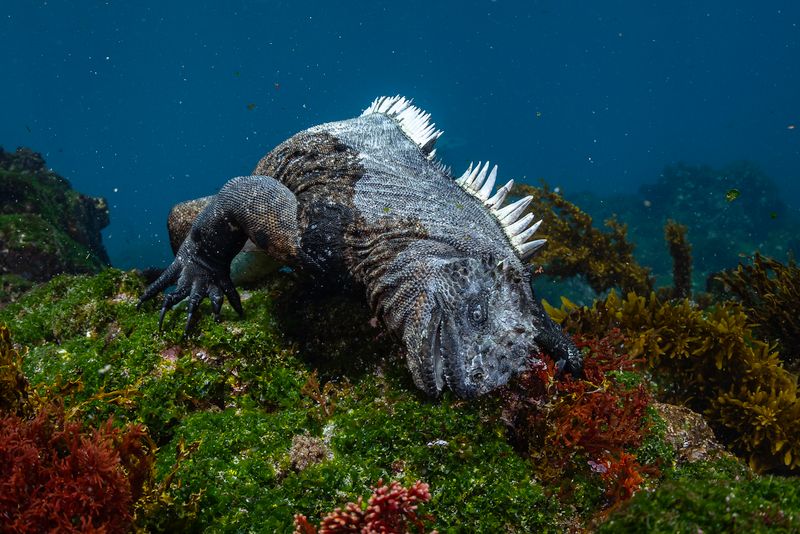
Cape Douglas on Fernandina Island offers a unique and thrilling diving experience, renowned for close encounters with marine iguanas. This is one of the few places in the world where divers can watch these extraordinary reptiles feeding on underwater algae, gracefully swimming and grazing along the volcanic rocks. The site features a dramatic underwater landscape shaped by lava flows and is teeming with marine life, making it a highlight of the Galapagos Sky itinerary.
Santa Cruz Island
While Santa Cruz is more developed than other islands, it still offers excellent opportunities to observe marine iguanas, especially at Tortuga Bay and Punta Estrada. These areas allow visitors to combine wildlife viewing with easy access to town facilities.
Santa Cruz also serves as a starting point for many diving in the Galapagos expeditions, making it a convenient location for divers hoping to encounter marine iguanas underwater.
Floreana and Isabela
Both Floreana and Isabela Islands feature stunning coastal landscapes where marine iguanas are commonly found. On Floreana, you can spot them near Punta Cormorant, while Isabela offers prime viewing near Tagus Cove and Punta Moreno.
Isabela is also the largest island and home to several subspecies of marine iguanas, making it a top destination for those interested in observing subtle differences among island populations.
Tips for Spotting and Photographing This Species
Marine iguanas are not particularly shy, but a respectful approach ensures a more rewarding and ethical wildlife experience. Here are some tips:
- Visit early in the morning or late afternoon when iguanas are more active and the lighting is ideal for photography.
- Stay low and move slowly to avoid startling them.
- Use a telephoto lens for close-up shots without disturbing their space.
- Avoid touching or feeding the animals.
- Respect park rules and always stay on marked trails.
Fun Facts About the Galapagos Marine Iguana
- Charles Darwin once described marine iguanas as “imps of darkness” due to their prehistoric look.
- They can hold their breath for up to 30 minutes while feeding underwater.
- Males can grow over 1.3 meters long, while females are generally smaller.
- During El Niño years, when algae is scarce, marine iguanas shrink in size due to the lack of food.
These quirky characteristics only add to their charm and underscore the importance of conserving their fragile habitat.
Diving with Marine Iguanas: An Underwater Experience
Seeing marine iguanas underwater is a unique and exciting experience. While not all of them swim frequently, in certain locations, especially near Fernandina and Isabela, they can be seen gracefully swimming beneath the surface in search of algae.
Diving with marine iguanas is often described as one of the highlights of diving in the Galapagos, particularly for underwater photographers who want to capture these creatures in motion. Liveaboard dive vessels like Galapagos Sky offer exclusive access to remote dive sites where these moments are possible, making it an unforgettable part of any underwater adventure.


