


You’ve heard the name. Maybe a fellow diver said it with that particular look in their eyes — part reverence, part warning. Darwin and Wolf aren’t just the best dives in the Galapagos. They’re arguably the best dives in the world. But getting the most out of them means showing up ready. This guide will tell you exactly how to do that.
Two Islands. One Expedition. Zero Room for Shortcuts.
There are dive destinations, and then there are Darwin Island and Wolf Island. If you’ve been diving long enough to hear those names mentioned, you already know what kind of weight they carry. These two remote volcanic outcroppings in the northern Galapagos archipelago are not just bucket-list sites — they are expedition-level commitments that will test every skill you’ve built over your diving career.
Learning how to prepare for Darwin and Wolf diving isn’t something you do in the week before departure. It starts months earlier, with intention. The currents are strong and unpredictable. The water is cold. The entries can be negative. And the rewards — wall-to-wall schools of scalloped hammerheads, whale sharks patrolling the blue, Galapagos sharks circling below — are unlike anything else on this planet.
This guide is written for experienced divers who take preparation seriously. If you’re ready to commit, let’s get into it.
Understanding Darwin & Wolf Dive Conditions
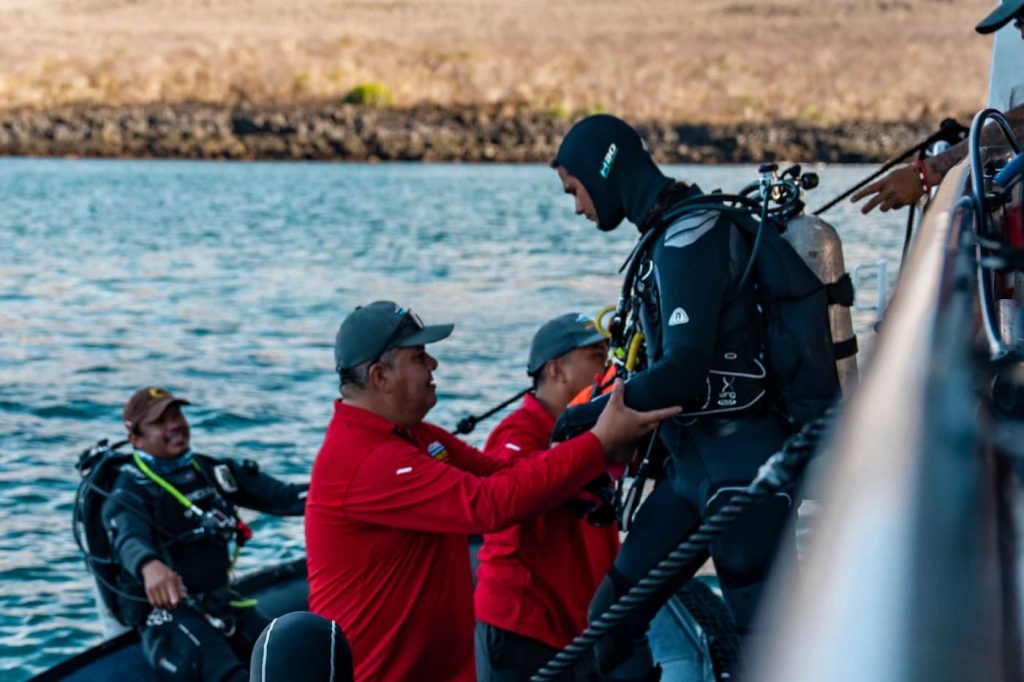
Before preparing for a dive trip to Darwin and Wolf, it’s important to understand what makes these sites so extraordinary. These remote islands are part of the Galapagos Marine Reserve, one of the largest and most protected marine ecosystems on Earth. That protection is precisely what allows marine life here to thrive. In ecology, biodiversity increases as you approach the equator and decreases toward the poles. Because the Galapagos sit directly along the equatorial line, divers encounter one of the highest concentrations of marine life anywhere in the world.
The same deep, nutrient-rich upwellings that support this biodiversity also create dynamic ocean conditions. Divers visiting Darwin and Wolf should expect an environment that is active and constantly changing — part of what makes diving in the Galapagos such a unique experience.
Here’s what divers typically encounter underwater:
- Strong, shifting currents — currents can change direction depending on tides and underwater topography.
- Blue-water ascents — in some areas there may be no reef reference, requiring good buoyancy control and awareness of depth and drift.
- Open ocean exposure — surge and surface chop can occur, particularly during entries and exits.
- Thermoclines — water temperatures typically range from 60°F to 75°F (16°C–24°C), with noticeable changes possible during a single dive.
- Typical dive depths around 60 ft (18 m), although some dives may go deeper depending on the site and conditions.
- Negative entries at certain sites to quickly descend to the reef and avoid surface current.
- Reef hooks are sometimes used by experienced divers, particularly underwater photographers handling large camera systems. They are not mandatory and generally avoided unless divers are trained in their use.
Physical Preparation: The 3–6 Month Window
The divers who struggle at Darwin and Wolf are almost never under-certified. They’re under-conditioned. Diving in strong currents Galapagos-style is physically exhausting in a way that recreational diving simply doesn’t replicate. Your cardiovascular system, muscular endurance, and joint stability all become factors the moment you hit water moving at speed.
Cardiovascular Endurance
Your aerobic base needs to be genuinely solid. Drift diving at depth with current resistance burns oxygen faster than calm-water diving, and a tired diver makes poor decisions. Build your foundation with:
- Swimming intervals — 400m sets with short rest, 3x weekly minimum
- HIIT training — 20–30 minute sessions, 2–3 times per week
- CO2 tolerance work — static apnea tables or breath-hold swims to improve comfort under oxygen stress
Strength Training
You don’t need to be an athlete, but you do need functional strength in the right places. Think about what actually happens in current: your legs are working hard to maintain position, your core is bracing against turbulent water, and your hands need to deploy a reef hook quickly and hold it under tension.
- Leg power: squats, lunges, and leg press — focus on endurance sets (15–20 reps)
- Core stability: planks, dead bugs, and rotational work — not for aesthetics, for drift control
- Grip strength: farmer carries, wrist rollers, or dedicated hand training for reef hook stabilization
Mobility & Longevity (Especially for Divers 35+)
A significant portion of the divers on any Galapagos liveaboard are in their 40s, 50s, or beyond. That’s not a problem — experience and composure matter more than age. But your recovery and mobility work needs to be intentional.
Prioritize shoulder mobility to prevent strain during entry and equipment handling. Invest in lower back strength and hip flexor flexibility — confined wetsuits and heavy gear create postural stress over a week-long expedition. Hydration and sleep quality on the boat are your best recovery tools. Take them seriously.

Technical Skill Preparation: What You Must Have Dialed In
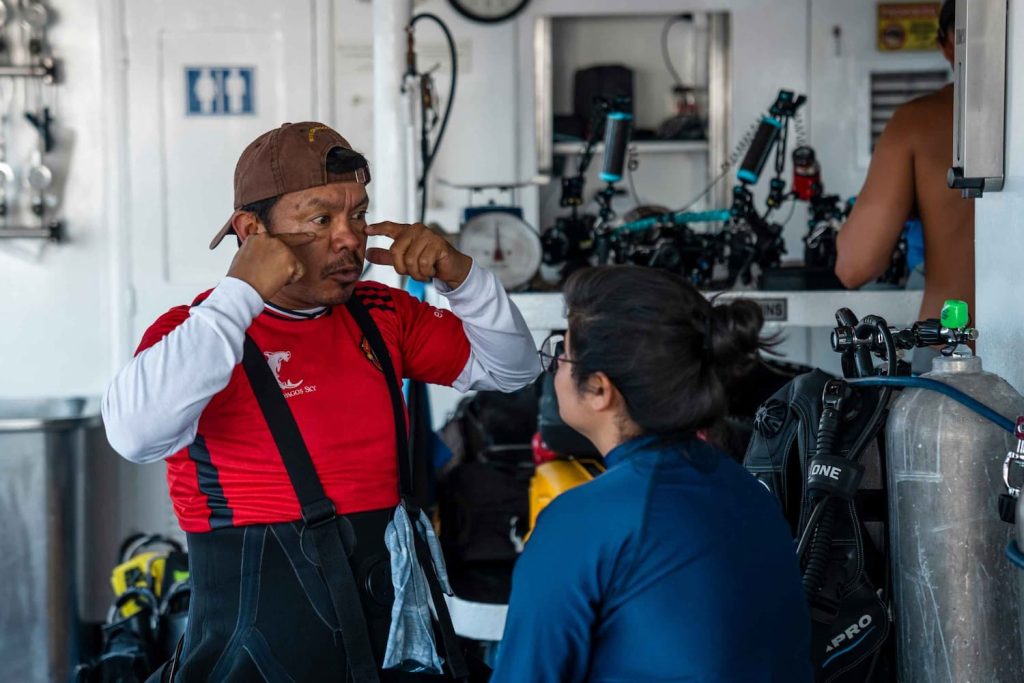
Master Drift Diving Before You Arrive
If your only strong-current experience is a single drift dive in warm Caribbean water, you are not ready for Darwin and Wolf. Advanced drift diving technique needs to be practiced in high-current environments — Caño Island, the Maldives, Komodo, or similar sites — before this expedition. Specifically:
- Practice reef hook deployment until it’s automatic — you won’t have time to think through it
- Run drills maintaining neutral trim in current without touching the reef
- Practice reading water movement — eddy lines, upwellings, current shadows behind rocks
Buoyancy: Non-Negotiable Precision
In blue-water conditions with no visual depth reference, your buoyancy control is the difference between a controlled ascent and an uncontrolled one. Before departure, honestly assess whether you can:
- Hover motionless without hand sculling for 60+ seconds
- Execute negative entries cleanly and reach your target depth without bouncing
- Run a blue-water ascent at a controlled 9 meters per minute with a 3-minute safety stop mid-water
If any of those feel uncertain, get in the pool or schedule some technical diving sessions. Your dive guide can manage many things, but they cannot manage your buoyancy for you.
Equipment Configuration
Cold water thermocline diving demands the right setup. The difference between a 5mm and a 7mm wetsuit matters enormously when you hit a 60°F thermocline at depth.
- Wetsuit: 5mm minimum, 7mm strongly recommended for longer dives and cold upwellings
- SMB: practice deploying your surface marker buoy with one hand in low-vis, in current, with gloves on
- Redundant signaling: whistle, mirror, and dive light at minimum — you’re in open ocean
- Dive computer: know your device’s alarm settings and how to read rate-of-ascent warnings at a glance
Recommended Experience Level
Galapagos Sky is designed for advanced divers. This is not a beginner’s liveaboard, and Darwin and Wolf are not beginner’s sites. Here’s the honest baseline:
- 100+ logged dives (considered the working minimum by most experienced operators in this region)
- Documented experience in strong current environments — not just “I’ve dived in current” but actual drift diving experience
- Comfort with deep diving profiles down to 120 ft (36 m) under load
- Advanced Open Water certification at minimum; Rescue Diver or higher is strongly preferred
If you’re right at the edge of these requirements, be honest with yourself. The dive briefings aboard are detailed and the guides are expert, but they cannot transform an unprepared diver into a prepared one mid-expedition.
Mental Preparation: The Part Most Divers Skip
Physical and technical readiness matter enormously. But in our experience — and as our senior dive guides consistently emphasize in their crew insights on diving Darwin & Wolf — the divers who have the best experiences here are the ones who show up mentally ready for unpredictability.
- Situational awareness: constantly read your environment, not just what’s in front of you
- Listen to every briefing as if it’s your first time — conditions change daily and briefing details save dives
- Embrace the discomfort of uncertainty: you will not always know what’s coming next, and that’s okay
- Trust your guides’ positioning decisions — they’ve logged hundreds of dives at these sites and read the current in real time
Mental composure under pressure is a skill. If you’ve never practiced it deliberately, use your prep dives to push into mild discomfort and practice staying calm and methodical.
The Reward: Why Every Hour of Preparation Pays Off
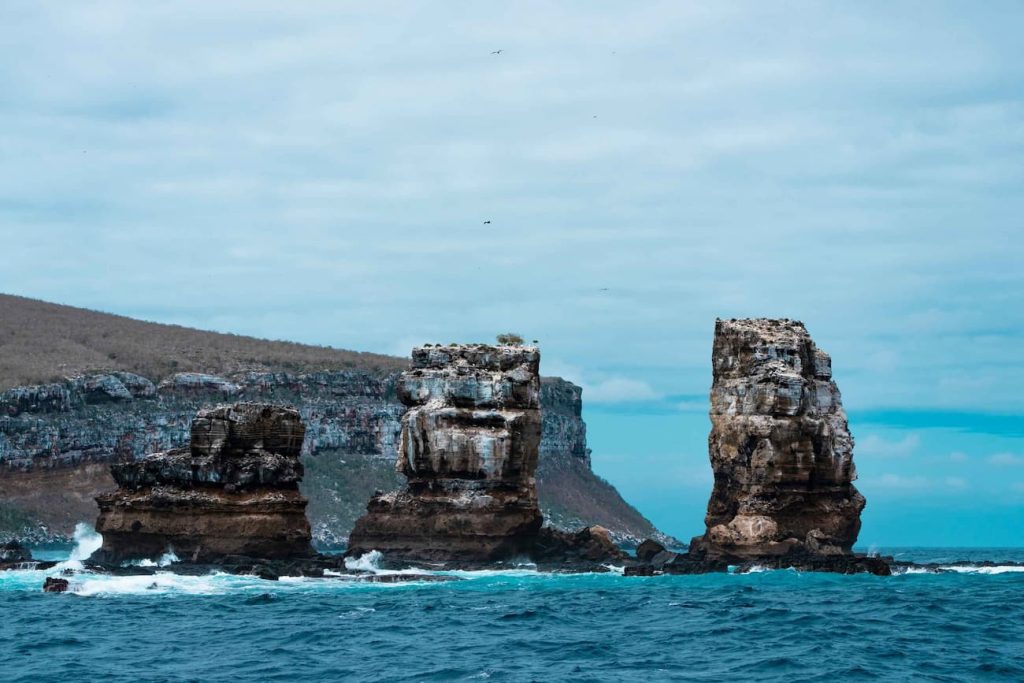
In 2021, Darwin’s Arch — the iconic natural rock formation that had marked this dive site for generations — collapsed into the sea from natural erosion. What remains are two towering basaltic pillars, now known as the Pillars of Evolution. The name fits. This is, after all, a place where the raw forces of nature have always been the point.
Nothing about what lies beneath the surface has changed.
You descend at first light alongside the Pillars of Evolution, current running hard. Your trim is solid, your breathing slow. And then, out of the blue, they appear — hundreds of scalloped hammerheads schooling in formation, moving with an ancient indifference to your presence. Whale sharks — some over 40 feet long — cruise through the column, unhurried and impossibly large. Galapagos sharks patrol the edges. Silky sharks weave through the chaos. Manta rays with wingspans up to 20 feet glide through on the current.
This is what living marine architecture looks like.
The marine life at Darwin and Wolf is not just abundant — it’s concentrated in a way that reflects decades of active conservation in the Galapagos Marine Reserve. None of it is accessible to the unprepared. All of it is waiting for those who do the work.
Ready to Make It Happen? Here’s Your Next Step.
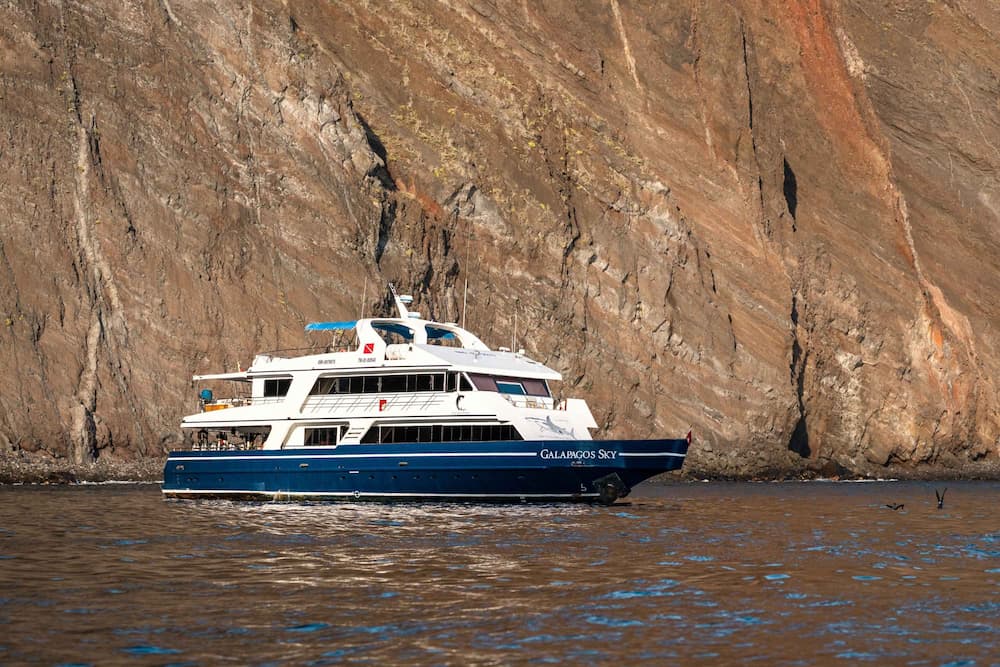
Galapagos Sky is built for exactly the kind of diver this article is written for. Our expeditions to Darwin and Wolf are led by a crew of highly experienced guides and divemasters who’ve spent years in these waters, and our liveaboard is equipped for the demands of northern Galapagos diving.
- Review our available departure dates and secure your spot early — spaces on these expeditions fill months in advance
- Speak directly with our dive specialists to discuss your current skill level and get honest guidance on preparation
- Begin your structured physical and technical training program at least 3–6 months before your departure date
This is expedition-level diving. Treat your preparation accordingly.
FAQ: Diving Darwin & Wolf
How many dives should I have logged before diving Darwin and Wolf? Most experienced operators recommend that divers have around 60 logged dives before visiting Darwin and Wolf, along with prior experience in drift diving and moderate current environments.
Just as important as the number of dives is recent diving experience. A diver who has been active in the water during the last six months will generally be more comfortable than someone with many dives logged years ago but little recent activity.
Advanced certifications and experience diving in currents will always improve comfort and confidence, but divers who are actively diving and familiar with drift conditions are typically well prepared to enjoy these sites.
A 7mm wetsuit is strongly recommended for Darwin and Wolf, particularly given the cold-water thermoclines that can drop water temperature to around 60°F (16°C). A 5mm wetsuit is the minimum, but divers without adequate thermal protection often end dives early.
Currents at Darwin and Wolf can exceed 3 knots and may shift direction with little warning. Dive conditions are assessed day-by-day and dive-by-dive by your guides.
Darwin’s Arch collapsed due to natural erosion in May 2021. The two rock pillars that remain have been named the Pillars of Evolution — a fitting tribute to a place that has always been defined by the raw, uncompromising forces of nature. The dive site itself is as spectacular as ever.
Galapagos Sky is designed for experienced, advanced divers. Divers without prior drift diving experience in strong currents will find Darwin and Wolf significantly challenging. We recommend accumulating strong-current dive experience at sites like the Maldives, Komodo, or Costa Rica before joining a northern Galapagos expedition.
Both islands fall within the Galapagos Marine Reserve, one of the world’s largest and most strictly enforced marine protected areas. The combination of cold nutrient-rich upwellings and decades of active conservation has created one of the densest concentrations of pelagic marine life on the planet — including scalloped hammerheads, whale sharks, Galapagos sharks, manta rays, and a wide range of deep-water pelagics.


