


Diving the Galapagos with Galapagos Sky is a once-in-a-lifetime experience—but it’s also advanced, remote diving that rewards solid preparation. This guide answers the key safety, certification, and preparation questions guests ask before reserving a cabin, so you can decide with confidence whether this adventure is right for you.
What Certification Do I Need for Galapagos Sky?
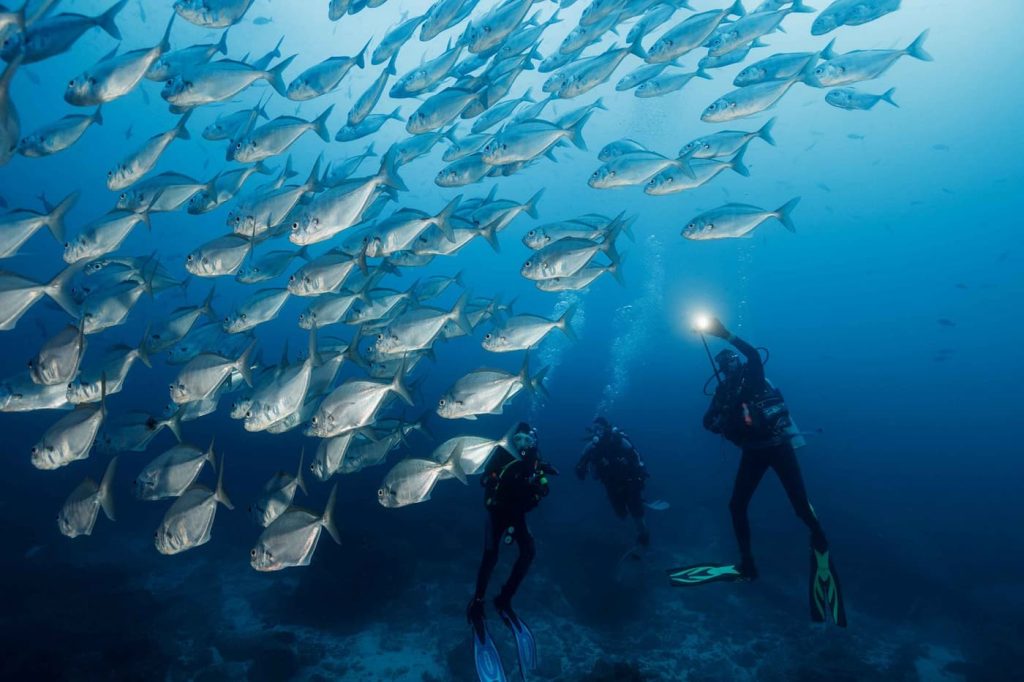
Galapagos Sky is designed for certified divers who are comfortable in the water and ready for world-class, big-animal diving. Most itineraries—especially those visiting Wolf and Darwin Islands—are considered advanced due to depth, strong currents, and blue-water ascents. If you’re imagining yourself hovering next to a school of hammerheads or watching whale sharks glide beneath you, this is the right boat—but it asks something of you in return.
Here’s what you’ll need:
- Minimum certification: Advanced Open Water (or equivalent). Basic Open Water is not enough for Wolf/Darwin dives; you need training for deeper profiles and dynamic conditions. Equivalent certifications include PADI, SSI, or NAUI Advanced Open Water or a recognized deep-diver program.
- Nitrox strongly recommended: With up to four dives per day on active dive days, an Enriched Air/Nitrox certification helps manage nitrogen exposure and extend bottom time.
If you’re currently Open Water only, the best path is to complete your Advanced and Nitrox training at home, in conditions that challenge you. Arriving with proven skills lets you focus on wildlife, not technique.

How Many Dives Should I Have Before I Book?
Rather than chasing a magic number, think in terms of both logged dives and recent, relevant experience. Muscle memory for currents, cold water, and deep dives matters more than the total count.
A practical guide:
- Aim for at least 40–50 logged dives, including several in current and lower visibility.
- Recent experience matters more than old logbook pages. A diver with 60–80 dives and regular cold/temperate water exposure is often better prepared than someone with 150 dives who hasn’t dived in two years.
If you’re slightly under the suggested range, use the months before your trip to build a block of practice dives—especially in currents, with a hood and thicker wetsuit. Galapagos Sky’s team can assess readiness based on honest experience, not just numbers.
How Challenging Are Galapagos Dives from Galapagos Sky?
Let’s be real: Galapagos Sky’s itineraries are built around the finest dive sites in the archipelago, meaning exposure to some of its most dynamic conditions. This is not gentle reef drifting. Guests regularly encounter:
- Currents and surge: From mild to very strong, often requiring negative entries, quick descents, and use of natural holds while keeping eyes on sharks, rays, and pelagics.
- Thermoclines and variable visibility: Water can shift from comfortable to significantly cooler within a single dive; visibility may drop near large schools of fish.
- Blue water ascents: Several sites require ascending in open water while deploying your SMB so the panga crew can track your position. This feels intimidating at first but becomes natural with practice.
These conditions are safe when you’re prepared and trust your guides. They demand solid buoyancy, confident gas management, and a calm head underwater. If that sounds exciting rather than overwhelming, Galapagos Sky is almost certainly the right boat for you.
How Does Galapagos Sky Keep Divers Safe?
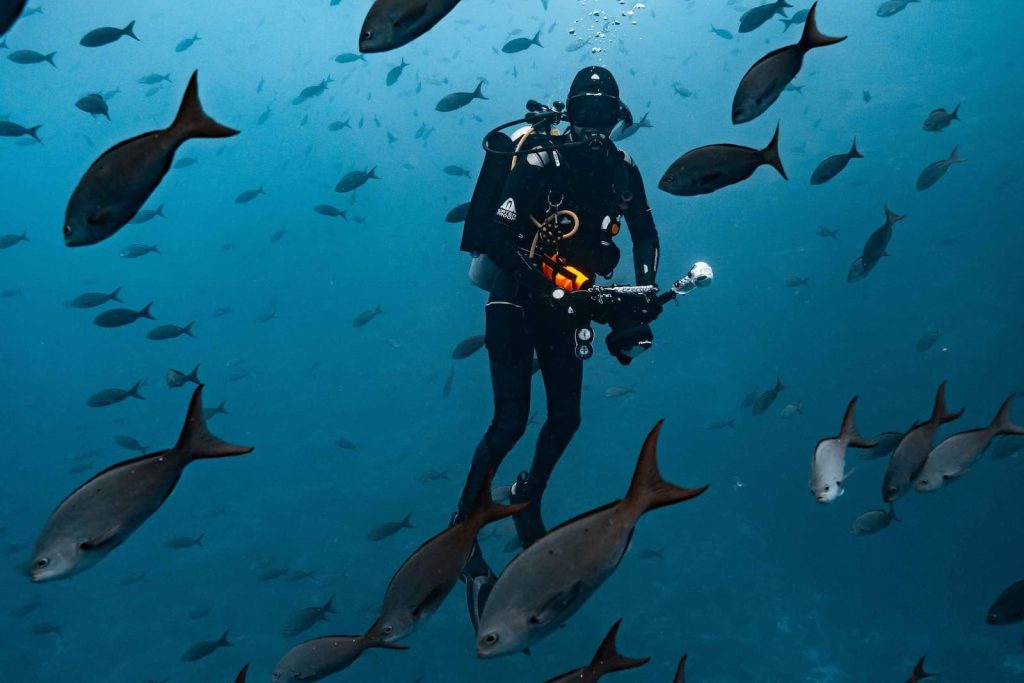
Safety isn’t just a policy—it’s built into every dive. The boat is staffed by experienced Ecuadorian dive guides who know these sites intimately: currents, entries and exits, and wildlife behavior. You are never out there alone.
Operationally, you can expect:
- Clear roll calls before and after every dive.
- Detailed site briefings covering depth limits, route plans, gas checks, and lost-buddy procedures.
- Onboard equipment including oxygen, first aid, life rafts, and signaling devices, plus personal SMBs and audible/visual tools for each diver.
In the water, Galapagos Sky maintains strict recreational limits: no decompression diving, no solo diving, and depth ceilings appropriate to each site. The goal is always safe, spectacular encounters, not pushing technical boundaries unnecessarily.
Do I Need Special Insurance or a Medical Clearance?
Because the Galapagos is remote and the diving is advanced, guests are strongly encouraged to treat health and insurance as essential, not optional.
Two non-negotiables:
- Dive accident insurance: Coverage must include hyperbaric treatment and emergency evacuation. Standard travel policies usually don’t cover these costs. Hyperbaric facilities are located on the mainland (Santa Cruz), so evacuation may take several hours.
- Medical self-assessment: Review standard dive medical questionnaires carefully. If you have cardiac, respiratory, or other significant conditions—or are returning after a long break—a physician’s clearance is wise.
Thoughtful preparation ensures you, your dive buddies, and the crew can focus on enjoying dives rather than managing preventable complications.

How Should I Prepare Before Joining Galapagos Sky?
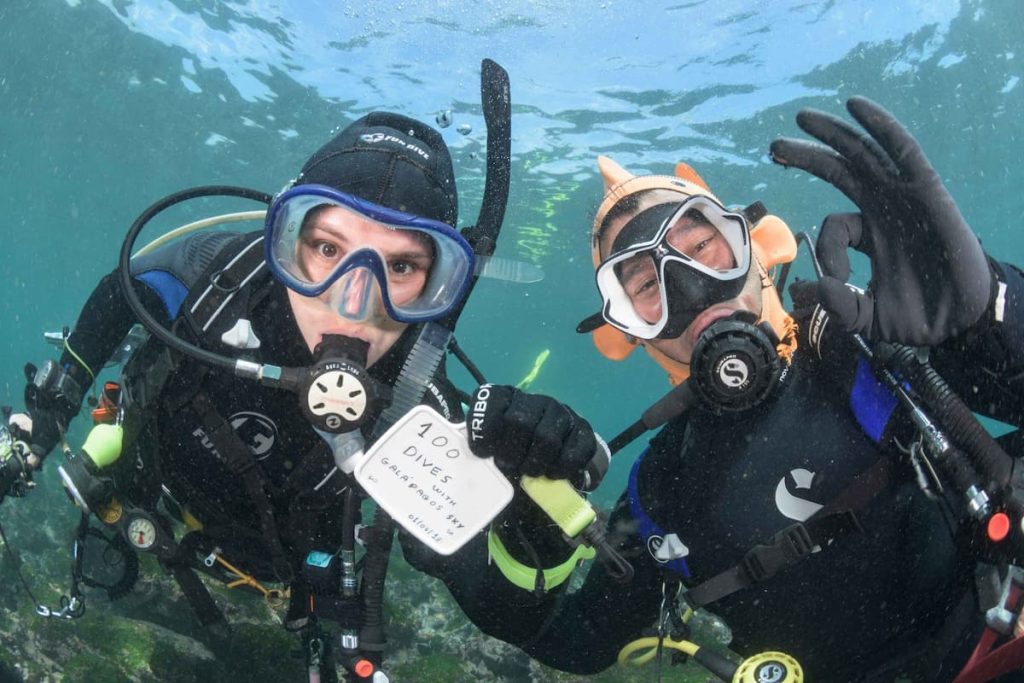
Divers who get the most out of Galapagos Sky arrive ready. Use the months before your trip to “train up” specifically for Galapagos conditions.
Skills and Courses:
- Refresh core skills with local dives, including in current and reduced visibility.
- Consider courses like Advanced Open Water, Deep Diver, Drift Diver, Peak Performance Buoyancy, and Nitrox, all directly applicable to Galapagos dives.
Equipment and Personal Safety Kit:
- Exposure protection: Water temps vary by season: June–November (cool dry) can drop to 18°C at Wolf/Darwin, December–May (warm wet) averages 22–26°C. For many guests, a 7 mm wetsuit with hood, gloves, and booties or a semi-dry suit is recommended.
- Personal safety kit: Dive computer, SMB, whistle, cutting tool, primary and backup light for night dives. These aren’t optional—they’re part of responsible liveaboard diving.
- If you’re bringing photography equipment, make sure you’re comfortable using it underwater so you don’t miss any moments while diving.
Arriving practiced and equipped transforms your week from a skills test to a celebration of them, letting you focus on hammerheads, whale sharks, marine iguanas, and all the other reasons you booked the trip.
Is Galapagos Sky the Right Next Step for Me?
If you love challenging, wildlife-rich liveaboard diving, hold or are close to earning your Advanced and Nitrox certifications, and are willing to prepare with honest, recent practice dives, Galapagos Sky may be the adventure you’re looking for.
Ask yourself:
- Am I comfortable in currents, confident in managing my gas, and able to stay close to my guide and buddy when conditions tighten?
- Am I prepared to respect depth limits, no-decompression rules, and safety protocols even when the action around me is intense?
- Am I ready to invest in the training, practice dives, and gear that make advanced destinations genuinely enjoyable?
If your answers are yes, stepping aboard Galapagos Sky puts you exactly where you belong: on a purpose-built Galapagos liveaboard, guided by an expert Ecuadorian crew, in one of the most extraordinary marine environments on earth. The hammerheads are already waiting.


