


Rebreathers change the way you manage time, depth, and gas underwater, offering capabilities that standard scuba cannot match. In the Galapagos, understanding their operation, risks, and best practices can make the difference between a safe, efficient dive and one that tests your limits.
Rebreather Technology and How It Works
Fundamentally, a rebreather is a life-support system meant to re-use the respiratory gas expelled by a diver. Unlike open-circuit scuba systems—where every exhalation is released into the water—a rebreather captures the exhaled gas, removes carbon dioxide, adds oxygen as required, and lets the diver breathe it again. This closed-circuit process dramatically reduces gas consumption and minimizes bubbles, making rebreather diving a preferred option for extended and discreet underwater exploration.
Maintaining a constant partial pressure of oxygen (PPO₂), rebreathers use onboard sensors and electronics to automatically regulate oxygen levels. This regulation is crucial for divers working in demanding and dynamic environments like the Galapagos as it allows for longer bottom times, ideal decompression profiles, and enhanced overall gas efficiency.

Key Components and How They Work Underwater
A scuba diving rebreather is composed of several interconnected systems that function as a single, continuous loop. Understanding these components is essential for safe and effective operation.
- Counterlungs: Flexible bags that hold the diver’s breathing gas and balance buoyancy changes during inhalation and exhalation.
- Scrubber Canister: Contains soda lime, which chemically absorbs carbon dioxide from exhaled gas.
- Oxygen and Diluent Cylinders: Supply gases that maintain proper oxygen levels and loop volume.
- Sensors and Control Unit: Continuously monitor and adjust oxygen concentration to the set PPO₂ value.
- Mouthpiece and Loop Hoses: Provide a sealed breathing circuit that prevents gas loss to the environment.
Each component must perform flawlessly. A malfunction in any part—especially sensors or the scrubber—can compromise safety, which is why strict pre-dive testing and redundancy planning are essential.
Why Rebreathers Excel in the Galapagos Environment
Large pelagic species are drawn to the deep drop-offs, thermoclines, and nutrient-rich waters found on the Galapagos Islands. For experienced divers, rebreathers for diving give chances that conventional systems cannot match.
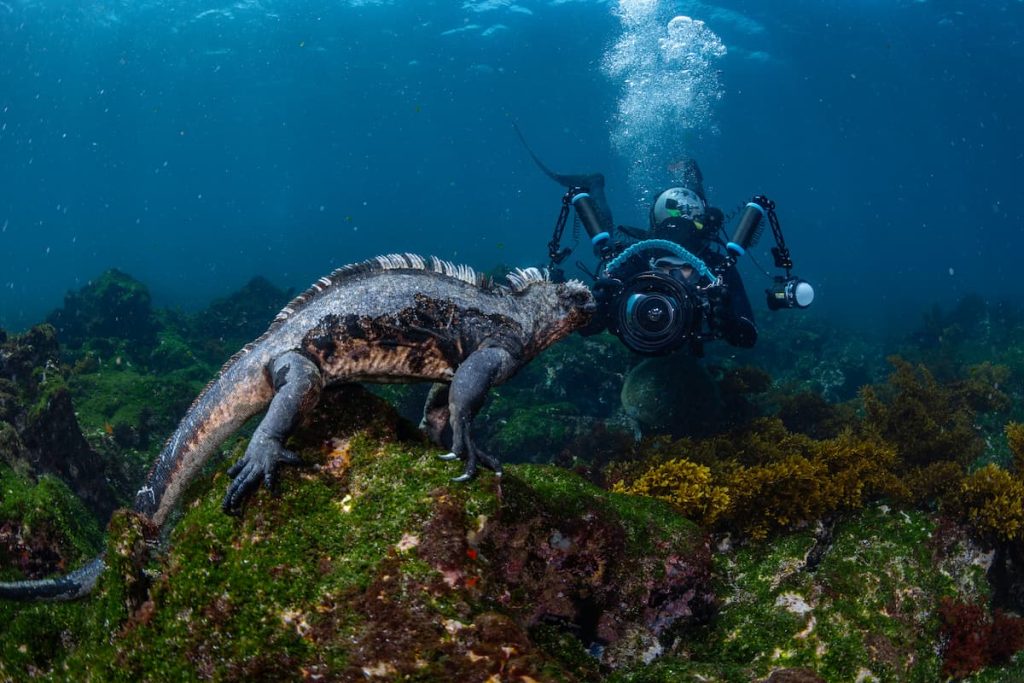
Divers who utilize rebreathers can increase bottom times in deeper locations like Darwin’s Arch or Wolf Island, where hammerheads, silky sharks, and whale sharks sometimes show up. beyond the scope of common dives. Less disturbed marine life under the bubble-free procedure allows for closer, more peaceful contacts. The warm, humid breathing gas from the closed circuit improves comfort and lowers heat loss in colder or strong current conditions, therefore increasing stamina on lengthy dives.

Operational Benefits
Beyond extended duration and stealth, rebreather diving offers several operational advantages that are particularly relevant in expedition-style diving:
- Optimized Decompression Profiles: Constant PPO₂ reduces nitrogen loading, resulting in shorter decompression times.
- Thermal Efficiency: Recycled breathing gas retains warmth and moisture, reducing diver fatigue.
- Gas Logistics: Lower consumption rates mean fewer tanks, less weight, and easier transport on liveaboards.
- Environmental Impact: Silent, bubble-free operation minimizes disturbance to marine ecosystems.
These benefits translate directly into increased efficiency, safety margins, and comfort for professional divers exploring complex underwater environments.
Risk Factors and Failure Modes to Consider
Rebreathers are complex systems, and precision is non-negotiable. With advanced performance comes increased responsibility and potential hazards if not managed correctly.
Primary risk factors include:
- Hypoxia or Hyperoxia: Caused by incorrect oxygen partial pressures.
- CO₂ Retention: Resulting from scrubber exhaustion or bypass.
- Sensor Drift or Failure: Leading to inaccurate PPO₂ readings.
- Loop Flooding: Introducing water into the breathing loop, compromising buoyancy and gas purity.
Even minor issues can escalate quickly underwater. A disciplined approach—thorough checklists, situational awareness, and adherence to bailout protocols—is vital for safe scuba diving rebreather operations.
Pre-Dive Protocols and Maintenance Best Practices
Essential before every rebreather dive is careful planning. Divers should first examine the loop for leaks to be certain that all hoses, mouthpieces, and O-rings are securely positioned and undamaged. The scrubber should be examined for residual absorptive ability; sensors must be adjusted to confirm exact oxygen levels.
Equally crucial is a careful examination of the bailout proposal to ensure that emergency gas supplies are easily available and that every team member knows of backup plans. Following the dive, the loop must be meticulously washed, cleaned, and dried to avoid rust or microbial development, therefore preserving the system’s integrity and reliability for next missions.
Following these procedures regularly guarantees that rebreathers for diving work safely and efficiently, especially under the harsh conditions of the Galapagos.
Training, Certification, and Operator Support in the Galapagos
Rebreathers call for dedicated practice and specialized instruction. Before trying closed-circuit dives in the Galapagos, certification from reputable organizations like TDI, IANTD, or PADI TecRec is required. Advanced courses cover emergency procedures, gas management, and system debugging—abilities that become second nature via practice and experience.
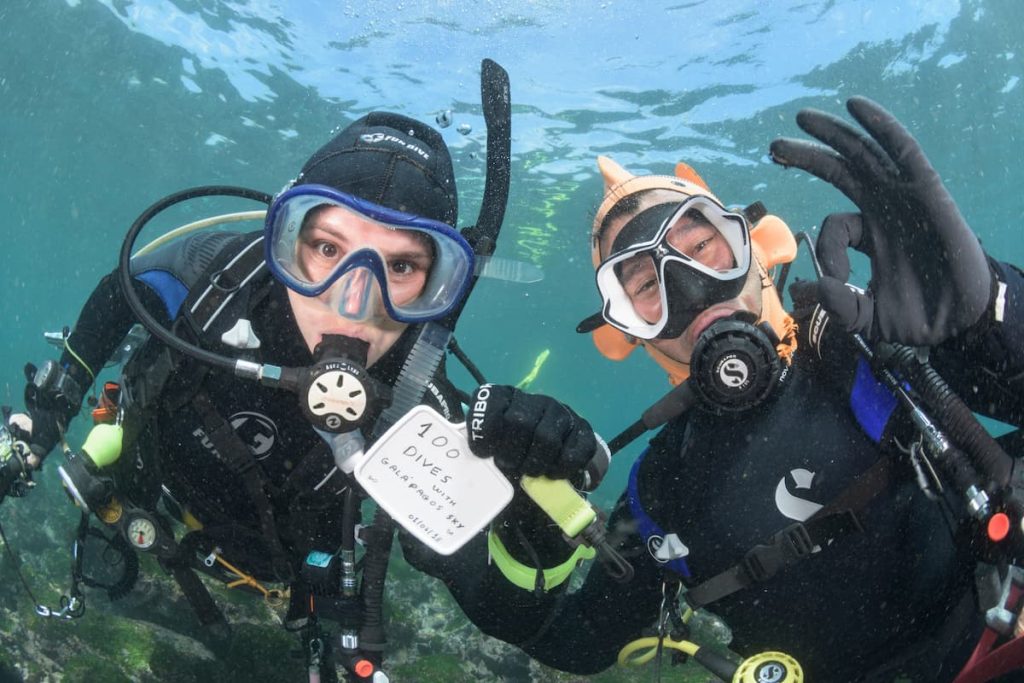
Offering oxygen fills, absorbent materials, and onboard amenities for maintenance, liveaboards like Galapagos Sky are designed to cater to certified rebreather divers. Trained closed-circuit support protocols guaranteed by dive guides and crew ensure a secure, effective, and legal operation throughout the trip.


