


Few diving experiences can compare to encountering a school of hammerhead sharks gliding silently through the blue waters. The Galapagos Islands offer one of the most exhilarating and consistent opportunities to witness these majestic creatures up close. If you’re dreaming of diving with hammerhead sharks in the Galapagos, this guide will walk you through everything you need to know — from prime locations and dive conditions to preparation and responsible diving practices.
Why is the Galapagos a Prime Destination for Diving with Hammerhead Sharks?
The Galapagos Islands are uniquely situated at the convergence of several major ocean currents, within a protected marine area, creating a nutrient-rich environment that attracts a wide variety of marine life. Among its most iconic inhabitants is the scalloped hammerhead shark, often found cruising the islands’ volcanic underwater ridges and plateaus.
Unlike many destinations where sightings are rare or seasonal, these sharks are present year-round, particularly around the northern islands. The abundance of food and the presence of relatively shallow cleaning stations make this region ideal for these sharks — and a magnet for divers seeking awe-inspiring underwater encounters.
The Best Diving Sites
The Galapagos archipelago is home to some of the most remote and pristine dive sites in the world. Among them, a few stand out for their exceptional encounters with hammerhead sharks. These locations not only offer thrilling marine life but also dramatic underwater landscapes that make each dive unforgettable. Follow our itineraries for more info.

Darwin Island
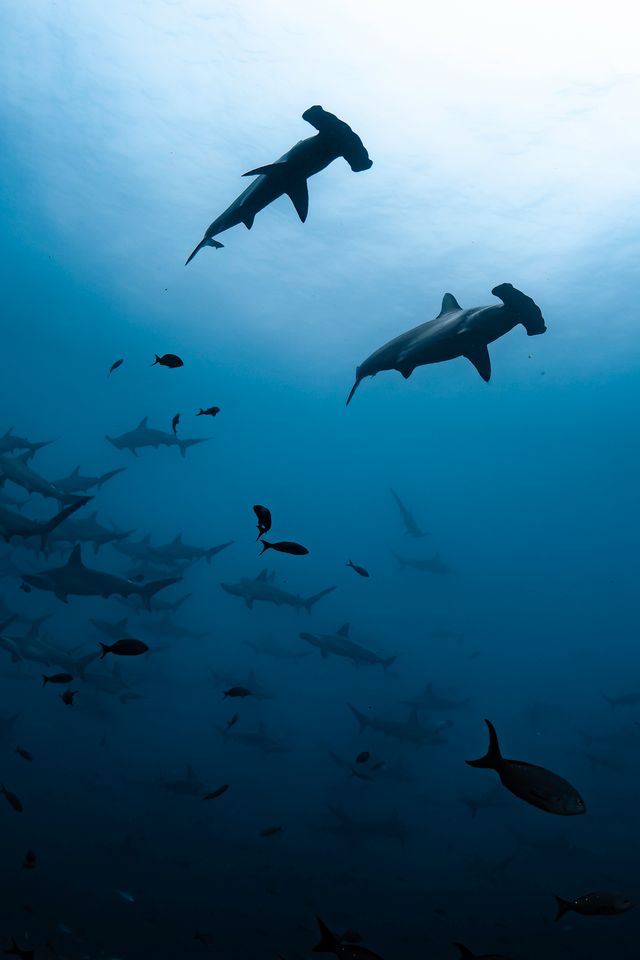
Often referred to as the crown jewel of Galapagos diving, Darwin Island is renowned for its spectacular underwater biodiversity, including numerous endemic species. The most famous site here is Darwin’s Arch, where a submerged platform serves as a gathering point for marine life, often attracting hundreds of hammerhead sharks at a time. The visibility is usually excellent, and the sheer number of sharks makes this one of the top hammerhead shark Galapagos dive spots in the world.
Wolf Island
Just south of Darwin, Wolf Island is another hotspot for hammerhead sightings. Its dramatic underwater cliffs and caves provide ideal resting and cleaning stations for these sharks. Divers also frequently encounter Galapagos sharks and large schools of fish. While whale sharks are more commonly associated with Darwin, they can occasionally be spotted at Wolf as well—adding to the excitement of what is often a once-in-a-lifetime diving experience.
When and Where to go for sightings?
Although Galapagos hammerhead shark diving is possible year-round, the peak season runs from June to November. During this period, the Humboldt Current brings cooler waters and a surge of marine life activity. These months tend to yield the highest density of hammerhead schools, particularly at Darwin and Wolf Islands. Access to these remote locations is typically possible only through liveaboard trips, such as those offered by Galapagos Sky, which provides expert-led itineraries tailored for advanced divers.
What to Expect When Diving with Hammerhead Sharks in the Galapagos?
Diving with hammerhead sharks in the Galapagos is a unique experience that combines breathtaking marine biodiversity with challenging and rewarding dive conditions. Understanding what to expect beneath the surface will help you make the most of every moment in these legendary waters.
Dive Conditions and Visibility
The Galapagos Islands are known for their dynamic and sometimes unpredictable dive conditions. Strong currents, surge, and thermoclines are common, especially around Darwin and Wolf Islands — the best places to see this species. These conditions are exactly what attract large pelagic species like the Galapagos hammerhead shark, but they also demand that divers remain vigilant and well-prepared. It’s important to be comfortable with drift diving and quick descents to safely navigate these underwater environments.
Visibility typically ranges from 10 to 30 meters, often improving during the cooler season from June to November. While the water may be slightly murkier during warmer months due to plankton blooms, this also means more food for marine life and, consequently, a higher likelihood of encountering large schools of these sharks. The visibility might not always be crystal clear, but the richness of life more than compensates, creating a thrilling and immersive experience.
Typical Dive Depths and Dive Profiles
Most hammerhead shark sightings in the Galapagos occur at depths between 15 and 20 meters. Divers typically position themselves along rocky ledges or underwater plateaus where hammerheads are known to cruise, especially near cleaning stations where smaller fish remove parasites from their skin. These dives often begin with a negative entry to ensure a swift descent and precise positioning near the action.
Dives in these regions are generally multilevel and require careful air and depth monitoring. Bottom times can vary depending on current strength and diver experience, and safety stops are strictly observed. Due to the challenging conditions and depth range, Galapagos hammerhead shark diving is best suited for advanced divers with solid buoyancy control and situational awareness.
The Thrill of Encountering a Hammerhead Shark School
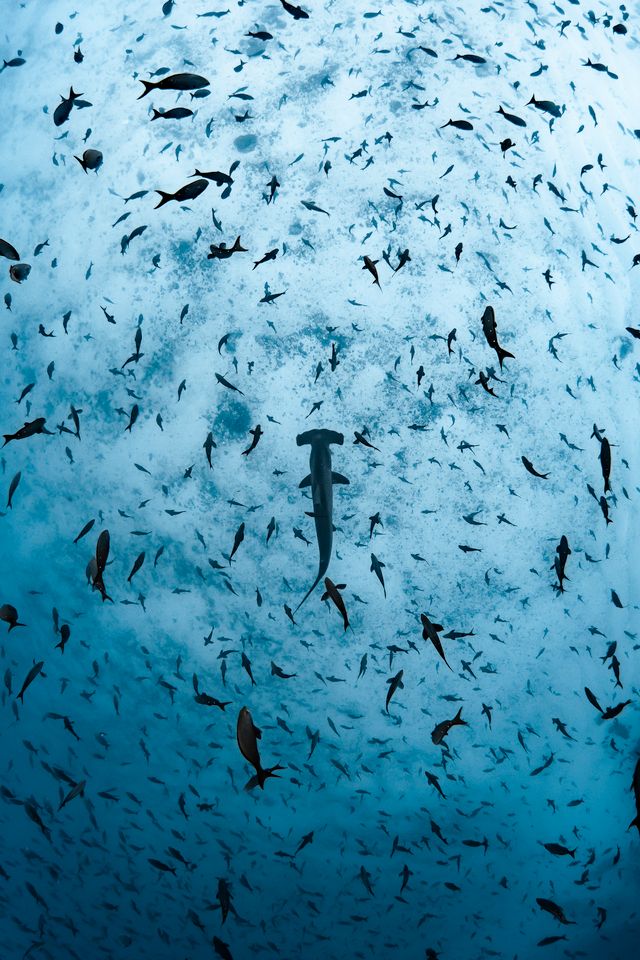
There’s nothing quite like watching a school of scalloped hammerhead sharks materialize from the blue. These majestic predators often swim in large, synchronized groups, creating a surreal, almost dreamlike spectacle that can leave even the most seasoned divers breathless. Their unique silhouettes — with wide, flat heads and fluid movements — add a level of otherworldly beauty to the encounter.
Despite their intimidating appearance, hammerhead sharks are typically shy and non-aggressive toward humans. Observing them in their natural habitat without disturbing their behavior is one of the core joys of Galapagos Islands hammerhead sharks diving. The combination of dramatic volcanic seascapes, the anticipation of spotting the first shadowy forms, and the sheer elegance of the animals themselves makes this a bucket-list experience for any serious diver.
Safety Tips and Responsible Diving Practices
Hammerhead shark diving in the Galapagos requires more than just excitement — it demands responsibility and awareness. From having the right experience level to following conservation rules, being a respectful and prepared diver is essential to protect both yourself and this fragile marine ecosystem.
Required Diving Experience Level
Due to the dynamic ocean conditions — including currents, surge, and varying visibility — diving with hammerhead sharks in the Galapagos is best suited for confident divers with prior experience. While not mandatory, Advanced Open Water certification and familiarity with drift diving are highly recommended.
Conservation Guidelines and Diver Etiquette
The Galapagos Marine Reserve is a protected ecosystem, and divers play a key role in preserving its delicate balance. Maintain neutral buoyancy, avoid touching marine life, and never chase or corner these sharks. Photography should be done with minimal disturbance, and always follow your dive guide’s instructions to avoid harming the environment.

What to Bring and How to Prepare for your Dive Trip
To ensure a safe and enjoyable adventure, proper preparation is key. From essential gear to physical conditioning, knowing what to pack and how to prepare will help you get the most out of your Galapagos hammerhead shark diving experience.
Recommended Diving Equipment
While most liveaboards provide essential dive gear rentals, it’s advisable to bring your own well-fitted mask, dive computer, and exposure suit. A 5mm wetsuit is typically sufficient, though gloves and a hood might be appreciated during cooler months. Some divers also bring reef hooks for better positioning in strong currents.
Physical Preparation and Dive Certification Needs
Cardiovascular fitness and leg strength are vital for handling currents and maintaining control during descents and ascents. Divers should ensure their certifications are up-to-date and consider refreshing their skills if they’ve been out of the water for a while.
Planning your trip with an experienced operator like Galapagos Sky ensures you receive the right support and guidance, from pre-dive briefings to in-water supervision.


