

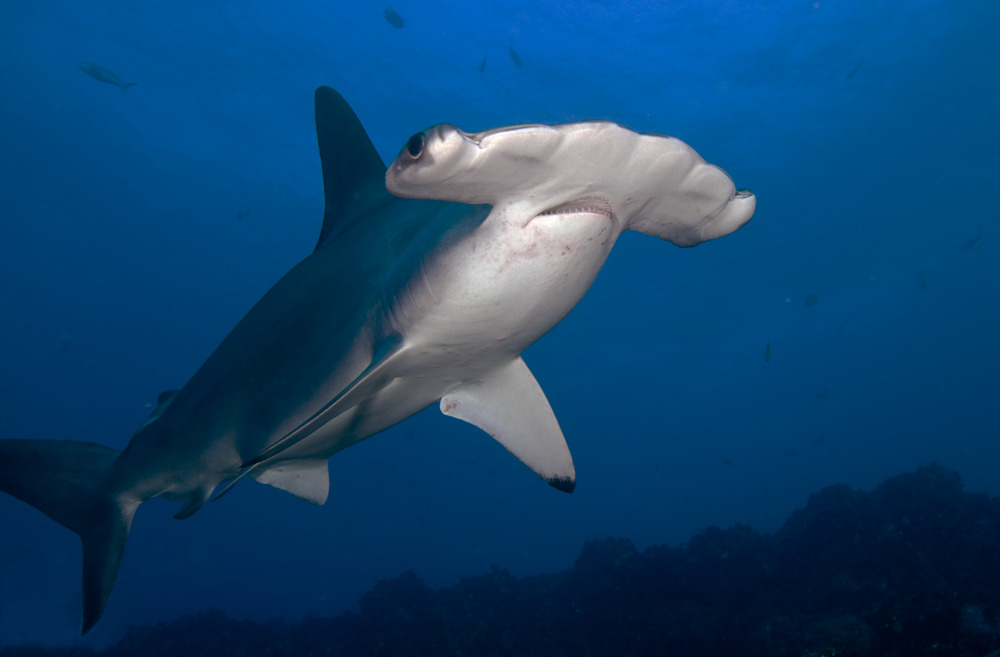
The Galapagos Islands are a global treasure, celebrated for their unique biodiversity and pristine ecosystems. Over the years, the Galapagos National Park and its marine reserve have made incredible strides in conservation, particularly in protecting marine life—and sharks are a key focus of these efforts.
Sharks play a vital role in maintaining the balance of marine ecosystems, yet many species face critical threats due to illegal fishing, habitat loss, and climate change. In the Galapagos, ongoing research and conservation initiatives are helping turn the tide, ensuring these majestic creatures continue to thrive.
Milestones in Shark Conservation
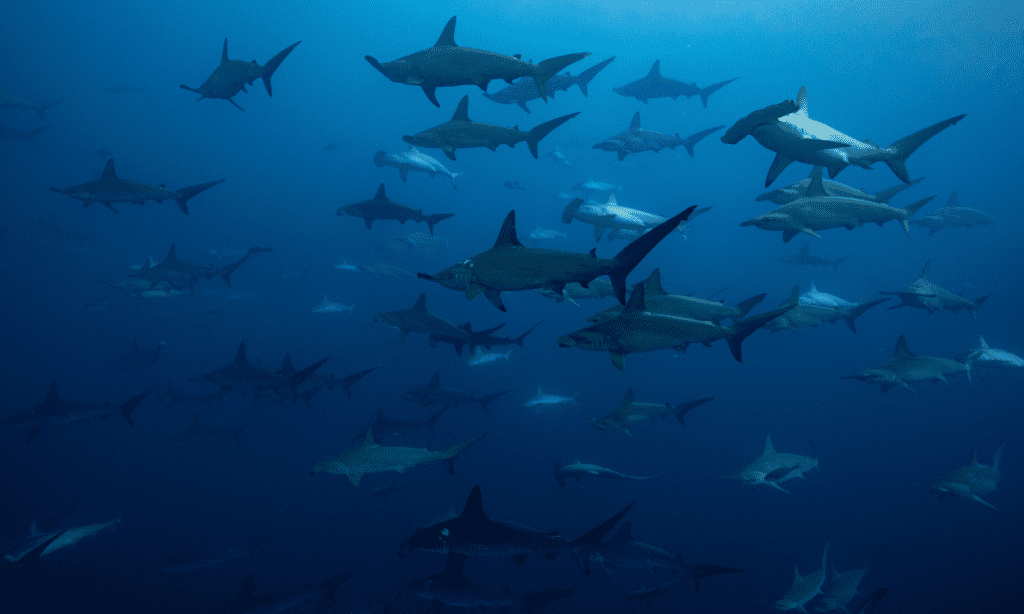
The Galapagos National Park Directorate (GNPD) has been at the forefront of shark conservation efforts within the Galapagos Marine Reserve (GMR). One of the most significant milestones in recent years has been the creation of the Hermandad Marine Reserve in 2022. This new reserve expanded marine protection by 60,000 square kilometers, creating vital migratory corridors for species like the critically endangered scalloped hammerhead shark.
The GNPD also plays a critical role in monitoring the reserve and combating illegal fishing, a major threat to sharks and other marine life. Through their constant surveillance and enforcement initiatives, the GNPD ensures the reserve remains a haven for vulnerable shark populations. Their collaboration with researchers, local communities, and conservation organizations has been essential in safeguarding the biodiversity of the Galapagos.
How Ecoventura Supports Conservation
At Ecoventura, we’re proud to support shark conservation through our partnership with the Charles Darwin Foundation (CDF) and the Galapagos Biodiversity and Education for Sustainability Fund (GBESF). Since the fund’s creation seven years ago, we’ve provided nearly half a million dollars to vital research, monitoring, and education programs.
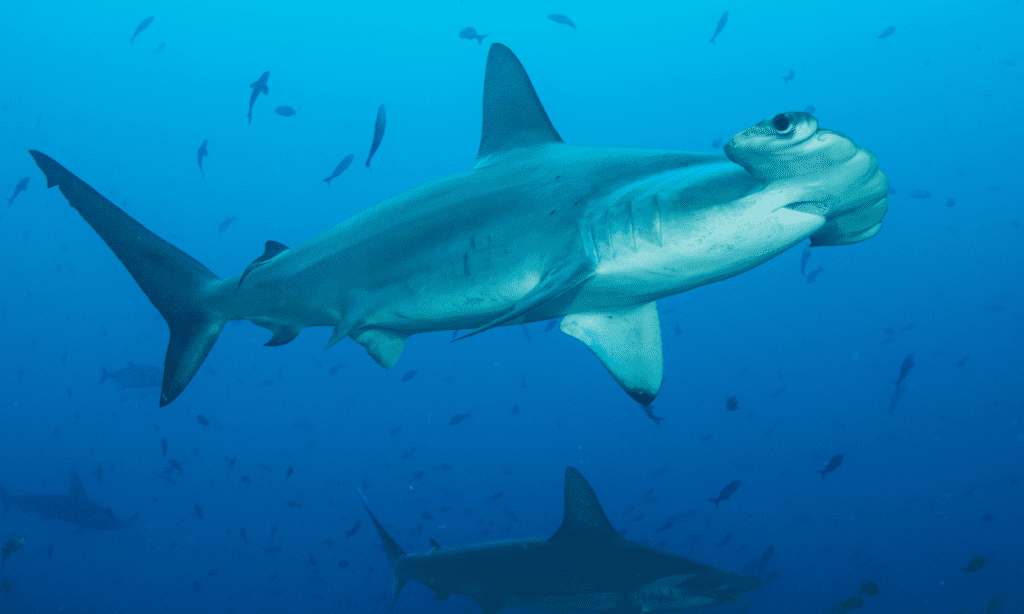
One of the fund’s standout projects involves tagging scalloped hammerhead sharks to track their migratory routes. These efforts have yielded invaluable insights into their behavior and vulnerabilities. For example, Cassiopeia, a 2.5-meter-long pregnant scalloped hammerhead, was one of 15 sharks tagged through GBESF support. Her incredible 4,000-kilometer migration from the Galapagos to birthing grounds off Panama provided the first documented round-trip satellite tracking of this kind.
This research underscored the need for international cooperation, as sharks often migrate beyond the boundaries of marine reserves. Insights from Cassiopeia and other tagged sharks are helping shape regional policies and strategies to better protect these species.
Beyond research, the GBESF focuses on educating the next generation of conservationists. Through scholarships and experiential education programs, we’re empowering young Galapagueños to become stewards of their islands and advocates for their unique ecosystems
The Path ahead
While the Galapagos Islands have made remarkable progress, the journey to protect sharks is far from over. Illegal, unreported, and unregulated fishing remains a significant threat, particularly as sharks migrate beyond marine reserve boundaries. By continuing to invest in research, regional cooperation, and community education, we can ensure these species have a fighting chance.
At Ecoventura, we’re committed to playing our part, not just as advocates but as active participants in conservation. Together with the Galapagos National Park, CDF, and the broader community, we’ll keep pushing for solutions that safeguard these waters and the incredible creatures that call them home.
As you embark on a diving adventure with Galapagos Sky, know that your journey supports these critical conservation efforts. Together, we can protect the wonders of the Galapagos for generations to come.


