The Galapagos Islands offer one of the most extraordinary underwater experiences on the planet. Teeming with life found nowhere else, this remote volcanic archipelago is home to some of the best diving spots in the world.
In this guide, we’ll explore the top dive sites in the Galapagos and exactly what you can expect to see at each one.
Why the Galapagos Is One of the Best Diving Locations in the World
Few places on Earth compare to the Galapagos when it comes to marine biodiversity. Located at the confluence of three major ocean currents—the Humboldt, Cromwell, and Panama—these islands attract a unique mix of tropical and temperate species.
But what truly sets the Galapagos apart as one of the best diving locations worldwide is its isolation. With little human interference and a protected marine reserve covering over 130,000 square kilometers, the underwater world here remains pristine, vibrant, and full of surprises.
You’re not just diving in the Galapagos—you’re entering a living, breathing evolutionary laboratory.
The Best Dive Sites in the Galapagos
From advanced drift dives to calm beginner-friendly reefs, the Galapagos offers something for every diver. Below, you’ll find the top sites that make this archipelago one of the best places to scuba on Earth.
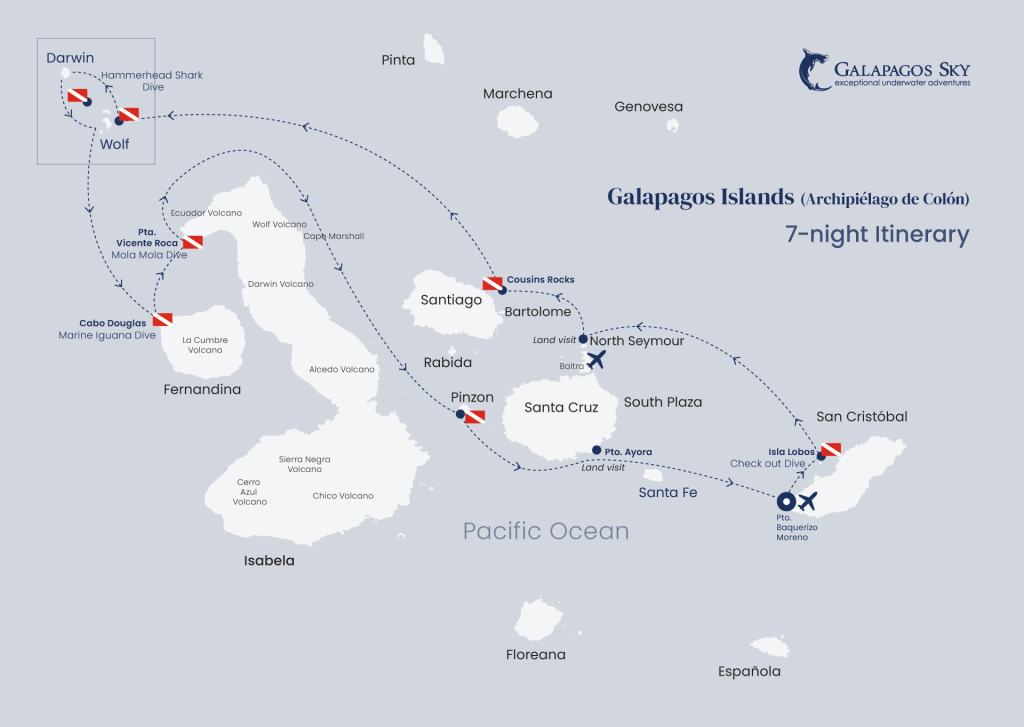
Darwin Island
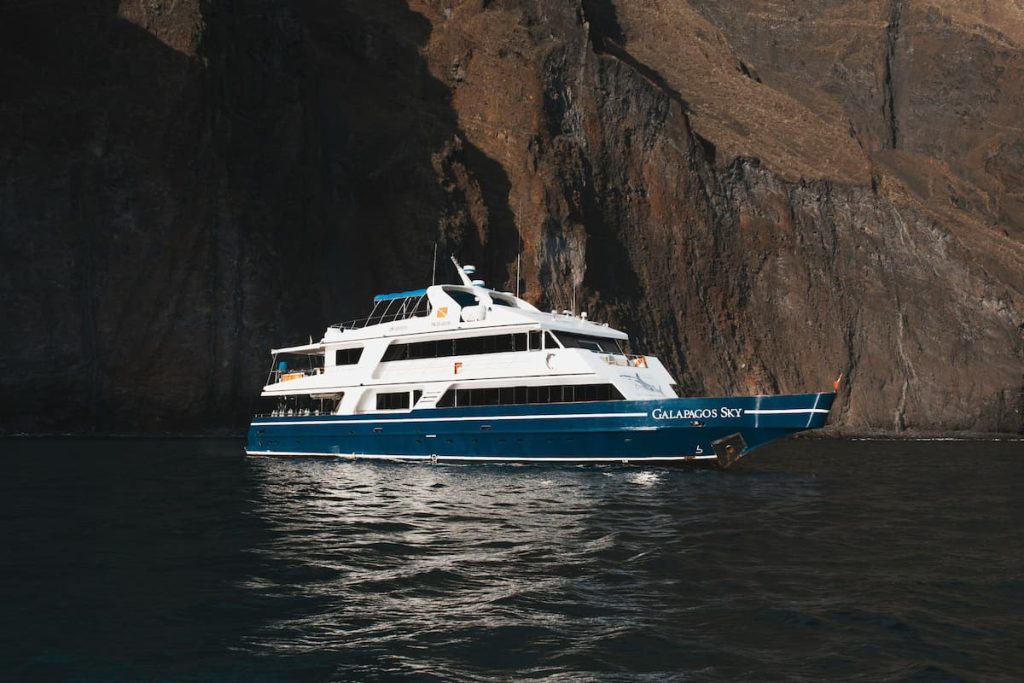
Often ranked among the best diving spots in the Galapagos, Darwin Island is legendary—and for good reason. Accessible only via Galapagos liveaboard diving, this remote site is a magnet for big life.
- Massive schools of scalloped hammerhead sharks
- Whale sharks (seasonal from June to November)
- Galapagos sharks, silky sharks, and blacktips
- Dolphins, turtles, and tuna
- Occasional orcas and manta rays
Visibility is often excellent, but strong currents and surge make this site ideal for advanced divers seeking thrilling encounters.
Wolf Island
Just a short ride from Darwin, Wolf Island offers one of the most action-packed dives in the Pacific. It’s a dynamic, high-energy site known for dense marine life and surprises at every turn.
You might descend into a wall of jacks, glide beside hammerheads, or spot curious dolphins weaving through the current. At night, moray eels emerge from crevices, and red-lipped batfish crawl across the sea floor.
It’s wild, unpredictable, and one of the reasons many divers say the Galapagos is the best place for diving.
Cabo Douglas (Fernandina Island)
There’s only one place on Earth where you can watch marine iguanas feeding underwater—and it’s here.
- Marine iguanas grazing algae off rocks
- Flightless cormorants diving in search of fish
- Galapagos penguins zooming past
- Turtles resting in the shallows
This dive feels like time travel. Evolution is on full display, and every movement feels ancient and fascinating.
Punta Vicente Roca (Isabela Island)
This site is located on the western coast of Isabela, where nutrient-rich waters from the deep well up into the volcanic coastline, creating a chilly but life-rich environment.
It’s the place to spot the elusive Mola mola (ocean sunfish) and creatures like:
- Frogfish camouflaged against rock faces
- Sea lions darting around divers in a dance
- Torpedo rays hiding under ledges
- Camouflaged octopuses in the sand
With lava tunnels and dramatic drop-offs, this dive is a treat for those who enjoy variety and the unexpected.
Cousin’s Rock (Santiago Island)
This small islet near Santiago may not look like much from the surface, but beneath the waves lies a haven for macro lovers and photographers.
The volcanic slopes are layered with ledges and overhangs, where life hides and flourishes. From playful sea lions to seahorses hanging onto soft coral, every inch reveals something new.
Its relatively calm waters and scenic reef make it ideal for intermediate divers—and a favorite for those crafting a personalized itinerary across multiple sites.
Gordon Rocks (Santa Cruz Island)
Nicknamed “the washing machine” for its swirling currents, Gordon Rocks is the place to dive with hammerheads if you’re based near Santa Cruz.
- Frequent hammerhead sightings
- Mobula rays, golden rays, and manta rays
- Large schools of snapper and barracuda
- Curious sea lions interacting with divers
It’s a high-adrenaline dive suited for experienced divers, and a great example of why central Galapagos isn’t to be underestimated.
North Seymour Island
If you’re just starting out, North Seymour is one of the best places to scuba for beginners in the Galapagos. The dive sites here are more relaxed, but still rich in life.
You’ll likely drift alongside reef sharks, see turtles feeding calmly on the reef, and enjoy the company of eagle rays gliding by. The presence of garden eels poking out from the sandy floor adds a whimsical touch.
Simple, beautiful, and very Galapagos.
Floreana Island
Floreana is known for its color—both in the reef and in the life that surrounds it. The underwater terrain here varies from sandy slopes to caves and ledges.
Expect:
- Stingrays and leopard rays
- Groups of playful sea lions
- Turtles, reef sharks, and moray eels
This is a great site for those who want to take it slow and enjoy the vibrant, layered marine world around them. It’s ideal for all levels and often overlooked—yet unforgettable.
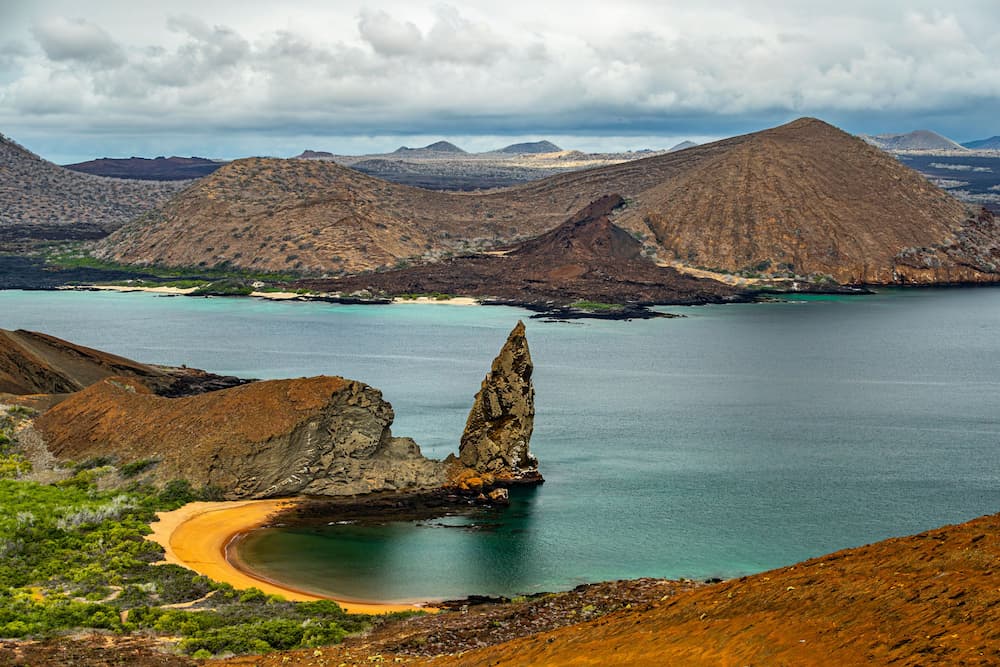
Bartolome Island
While Bartolome’s landscapes are some of the most photographed in the Galapagos, its underwater world is just as captivating.
Here, you’ll swim alongside Galapagos penguins, glide over sandy bottoms with white-tip reef sharks, and spot octopuses tucked into rocky ledges.
The calm conditions and excellent visibility make this dive perfect for a peaceful, slow-paced experience that still delivers plenty to see.